
What The Bead Remembers
In Tseminyu, Nagaland, two people and one slowly fading craft. Runole, who has spent thirty-five years threading beads by firelight, and Agwasin, a young restaurateur who picked up the craft before it disappeared entirely. Between them, a story about what we carry forward, what we let go, and what happens when tradition finds new hands.

Storyteller : Kesonye Kath
Himal Prakriti Storytelling Fellow
Village Sendenyu, Tseminyu District,
Nagaland
Read this story in Hindi
As Runole knelt to arrange the firewood, I asked gently,
“How long have you been making traditional jewellery, Anyü?”
Without looking up, she continued feeding the fire and replied,
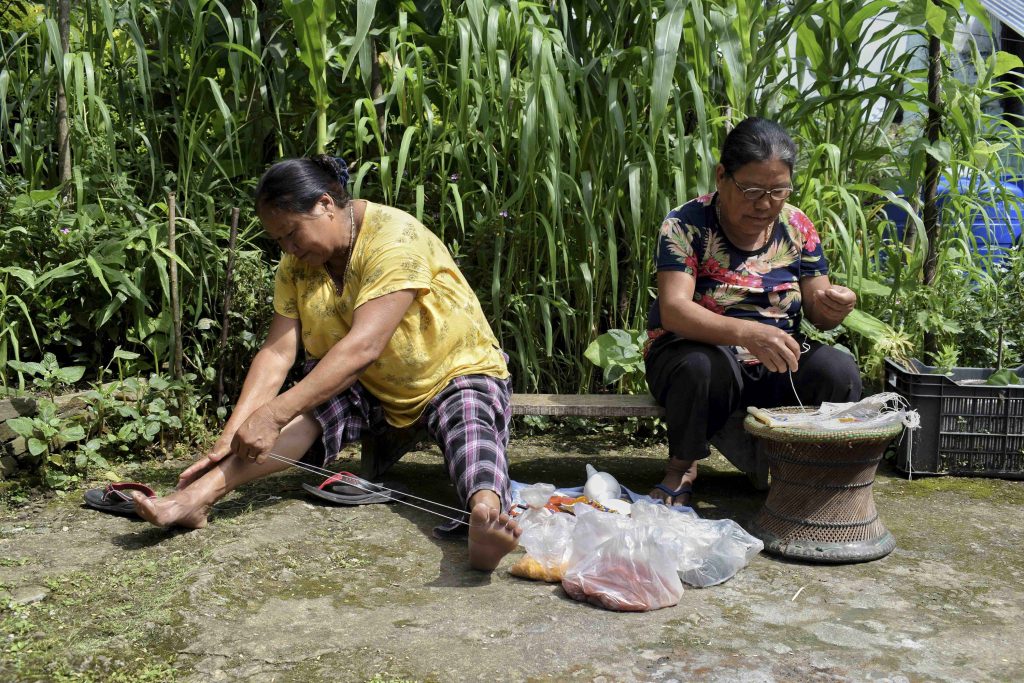
“I never really thought about making jewellery before I got married. It just wasn’t something that ever crossed my mind. I’ve been married for about thirty-five years now, and I guess that’s also how long I’ve been making jewellery. It actually started after I became a mother. I needed to make small things like earrings and necklaces for my children, and that’s how I slowly got into it. It wasn’t planned or anything, it just kind of became a part of my life over time.”
There was a time when the weight of beads rested easily on everyday life, around necks in the fields, against wrists in the kitchen, catching the sun as people moved through their day. Today, they lie folded away, brought out only when the village gathers on special occasions, their stories worn less often than before.
I had been meaning to sit with Runole, Anyü (aunt), for weeks. She has spent thirty-five years threading beads into memory, holding on to a craft that now slips quietly through fewer hands. But my days had been scattered, split between online classes for my Master’s and the small, constant rhythms of caring for my daughter. Time passed in fragments, and the visit kept waiting.
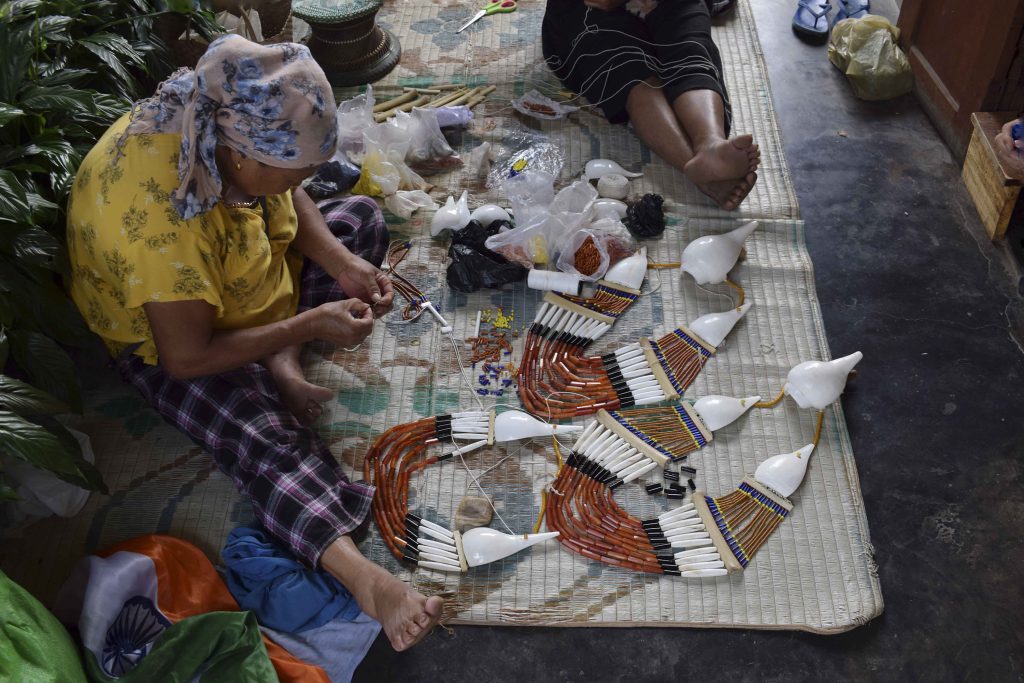
Photo: Kesonye Kath
That afternoon, almost without planning, I reached for my phone and called her.
“Anyü, are you home?”
There was a brief pause on the other end, the faint sound of movement behind her voice.
“Yes,” she replied, simply.
Without giving it much thought, I reached for my keys and left. As I made my way, I wondered if I had waited too long, if the stories I wanted to hear were already fading, like the beads now tucked away in wooden boxes and quiet corners. But something about the day, the stillness of the afternoon, the pull of unfinished intention, felt like it was asking to be followed.
And so I went, carrying with me questions that had been waiting, and stories that were perhaps waiting too.
Runole had just returned home after washing clothes at the community pond of Tseminyu Village. It was already 2:30 in the afternoon. The sun traced golden silhouettes across her home, enriching every edge with quiet beauty and drama. Winter days are short here, and the sun retreats early from our part of town, yet the sky still felt warm and welcoming as we settled on her front porch.
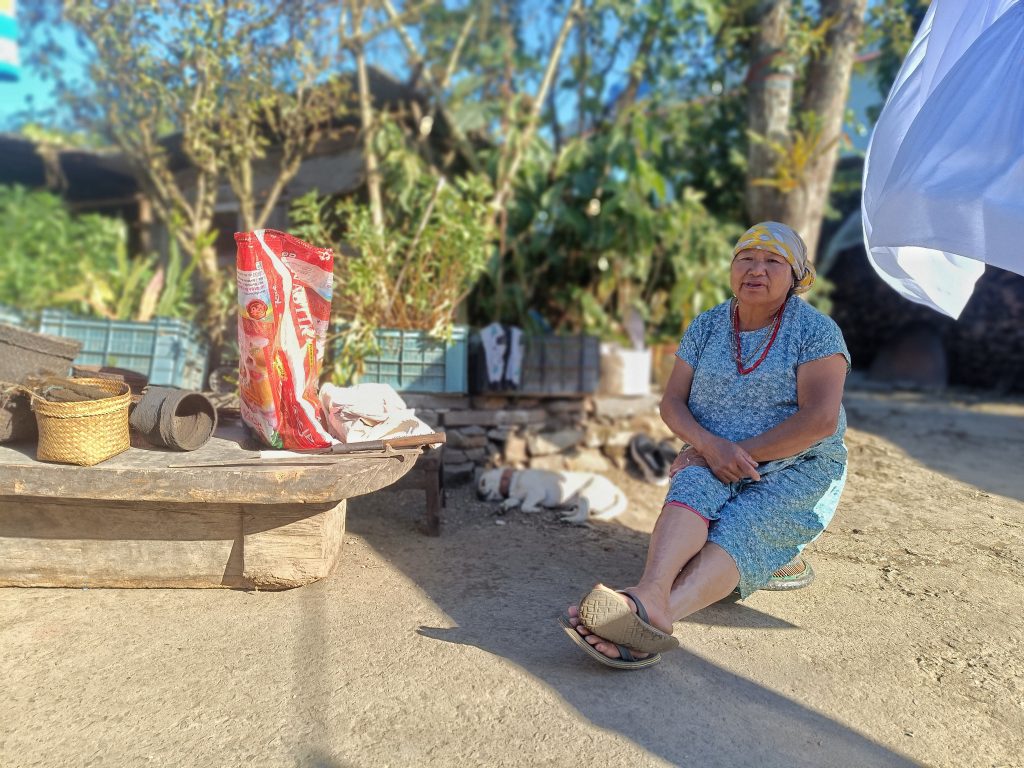
“What’s your sudden plan for coming up to the village today?” Anyü Runole asked, smiling as she lowered herself onto the mora, the bamboo stool, its woven bamboo creaking softly beneath her.
She had returned only a few days earlier from the Hornbill Festival, 2025, where she and fifty-one others had represented the Rengma community at Kisama, the Naga Heritage Village.
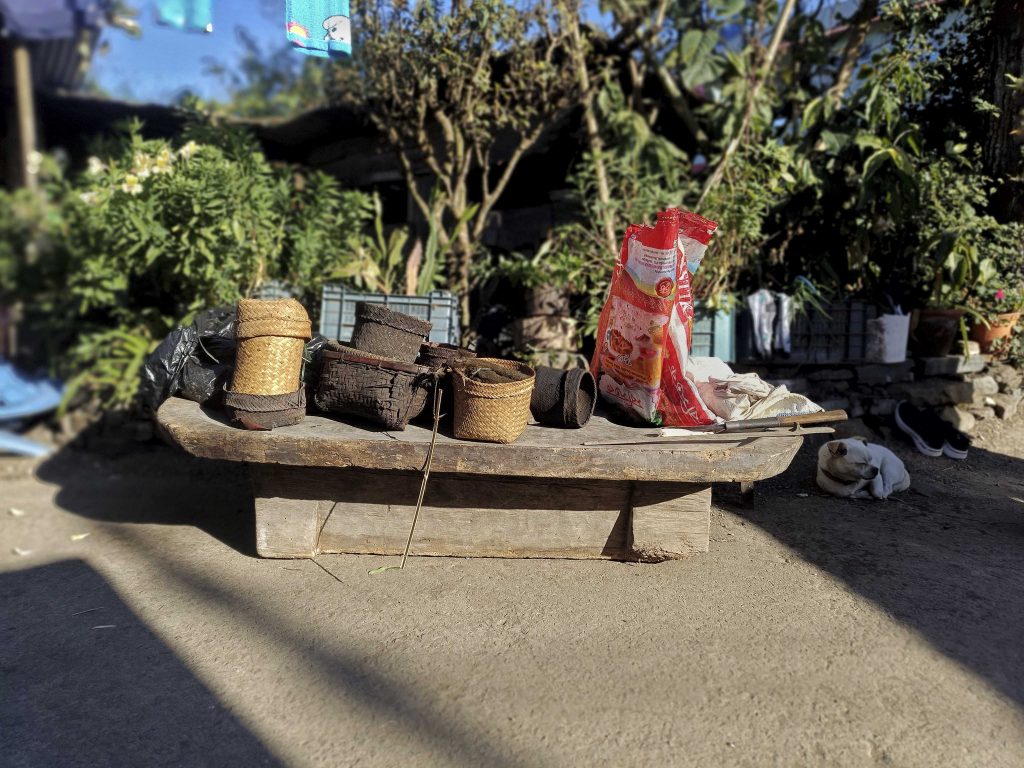
“Ahh, the warmth of the sun feels so comforting after being in the water, washing clothes the whole day” Anyü sighed, stretching herself gently as she let the sunlight settle over her. Her voice carried the marks of the journey, raspy from days of singing and dancing, and strained by long hours in the biting winter cold. Spread out beside us, basking in the afternoon sun, lay a traditional pounding bed and handwoven baskets. They too had travelled to the festival, used at the Rengma Morung, and now rested quietly back home.
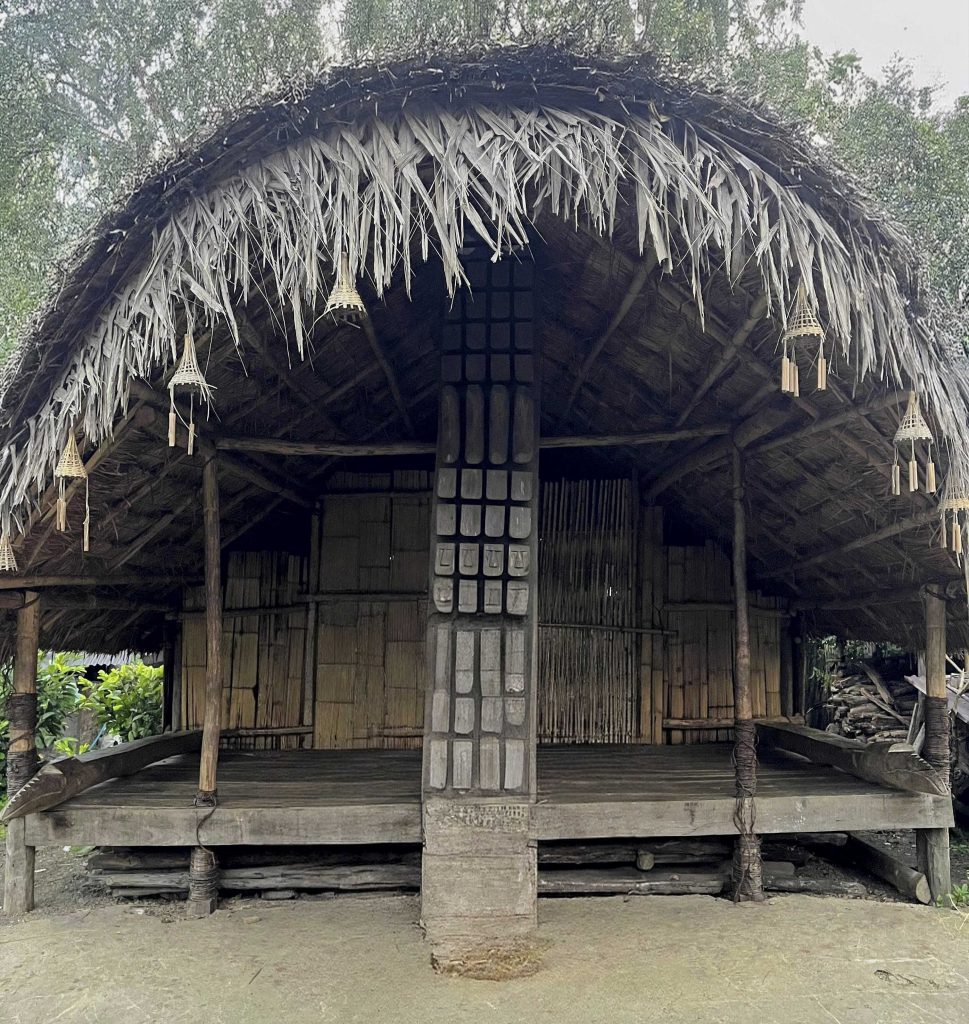
The morung was once at the heart of Naga village life, a traditional dormitory where young, unmarried men lived together before marriage. It was more than just a place to sleep. It was where they learned how to live. Evenings were filled with stories, lessons, and quiet observations, of elders speaking, of skills being practiced, of traditions being passed down without ever feeling like instruction. This was where discipline took shape, where values settled in, and where a sense of identity slowly grew. Over time, the morung has changed. It no longer lives in the same way it once did. Today, it stands more as a reminder than a residence, a structure that holds within it the memory of what used to be. Yet, even in this quieter role, the morung continues to carry weight. It remains a powerful symbol of history and heritage, holding together the stories and shared past of villages, tribes, and communities across Nagaland.
Conscious of the fading daylight, I hurried our conversation indoors. Before the sun dipped behind the hills, we moved to the warmth of her kitchen, where the hearth glowed softly against the cold.
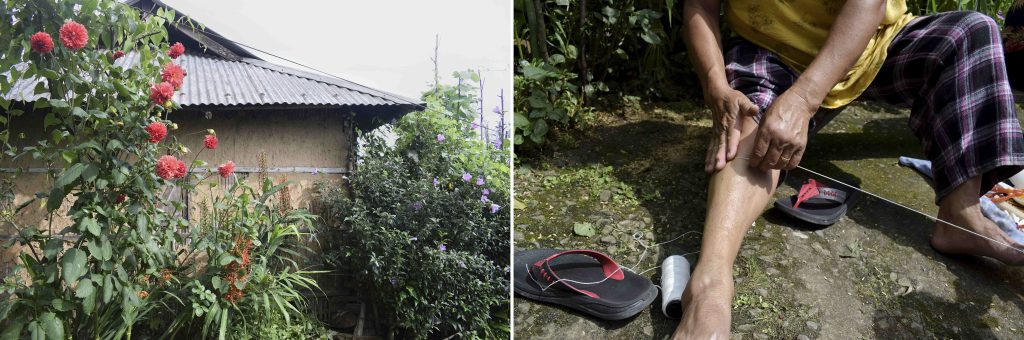
and piecing each bead. Photo: Kesonye Kath
She leaned a little closer to the fire, nudging the logs into place before continuing, almost as if thinking out loud. “I don’t really remember learning it from my mother,” she said. “It was my aunts… I think I picked it up from them.”
She paused, then added, “They never sat me down and taught me properly. I would just watch them, sit nearby, and slowly try to do it myself. At first, it was just about getting the beads right, putting them together without messing up. But over time, they would tell me what the colors meant, which bead to use, why it mattered.”
Her hands moved instinctively as she spoke, as if still threading an invisible string. “It took time. A lot of patience. But slowly, I started liking it… and then I just kept doing it.”
She smiled faintly. “What began as something I needed to make for my children… it became something more. It connected me back to my family, to my people… to where I come from.”
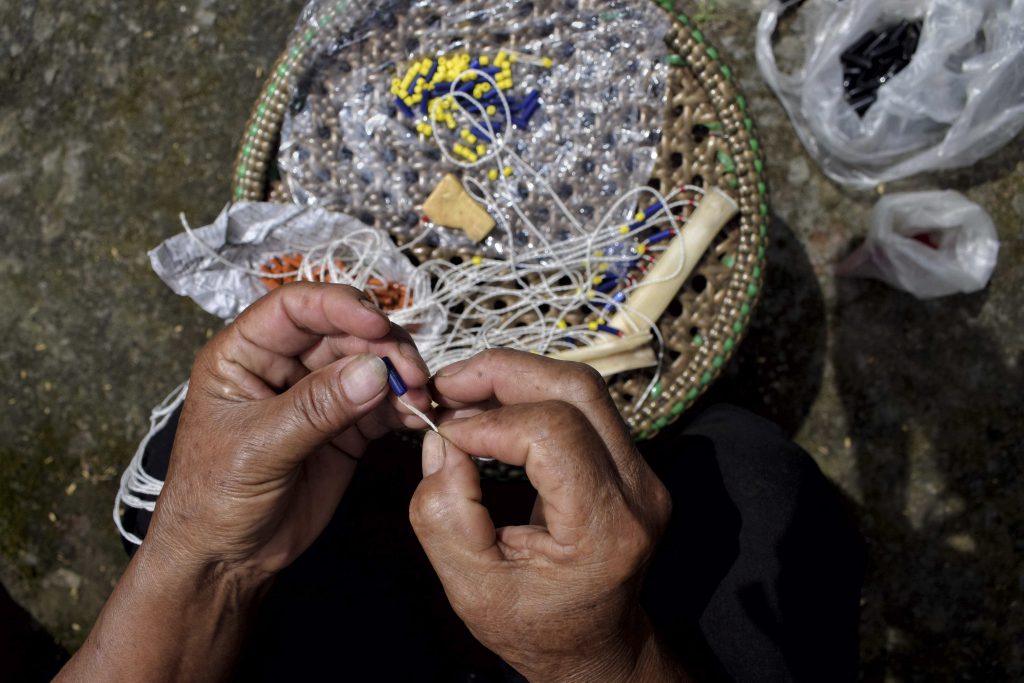
The flames caught, crackling softly. I leaned closer to the hearth and asked again,
“What has jewellery-making meant to you, both as a craft, and as a part of your life?”
She paused, her hands resting on her knees.
“Jewellery has always been a vital part of who we are,” she said. “It wasn’t something we wore only for festivals. It was part of everyday life.”
“As far as I can remember,” Runole continued, crouching beside the hearth, “in my mother’s time, women wore armlets and necklaces like Tyü-sin even when they went to the fields.”
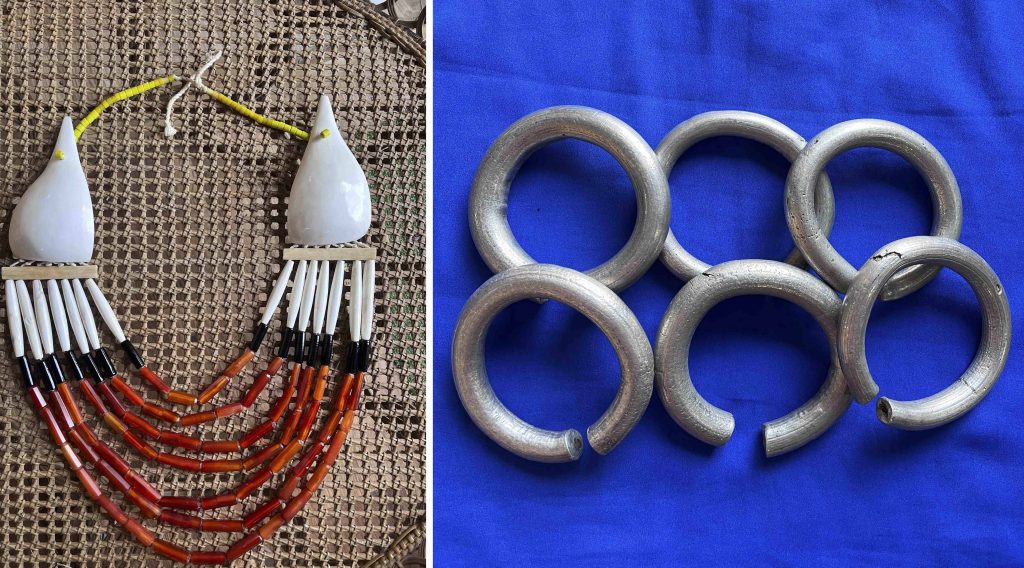
Photo: Sonye Kent
She leaned forward and blew gently into the fire; the embers glowed brighter, sending thin threads of smoke curling toward the roof.
“They would wrap the jewellery carefully in cloth and tuck it inside their bamboo baskets while working,” she continued, placing another log onto the flames. “Then they’d wear them again before coming home. What we now save for rare occasions was once worn every day, woven into both attire and identity.”
A chicken darted into the kitchen, pecking at scattered grains near the doorway. Without breaking her sentence, “Shooo” Runole waved it away with her foot.
“Even the gin, the armlets, were worn while pounding rice,” she added, smiling. “It was a sign of good luck.”
I asked, “Anyü , were the jewelleries different for different age groups, especially among women?”
“Yes, definitely,” she replied, reaching for a pot and rinsing it at the sink. Water splashed softly as she spoke.
For women, jewellery was more than adornment, it marked the passage of life. In the Rengma community, earrings signified each stage, tracing the journey of a woman through time.
“From birth until five or six months, baby girls wore Nyeshye earrings. From eight to ten years, they wore Nyesin. When they reached adolescence, Nye Tyütse. And when they became marriageable, Nye tyüzi.”
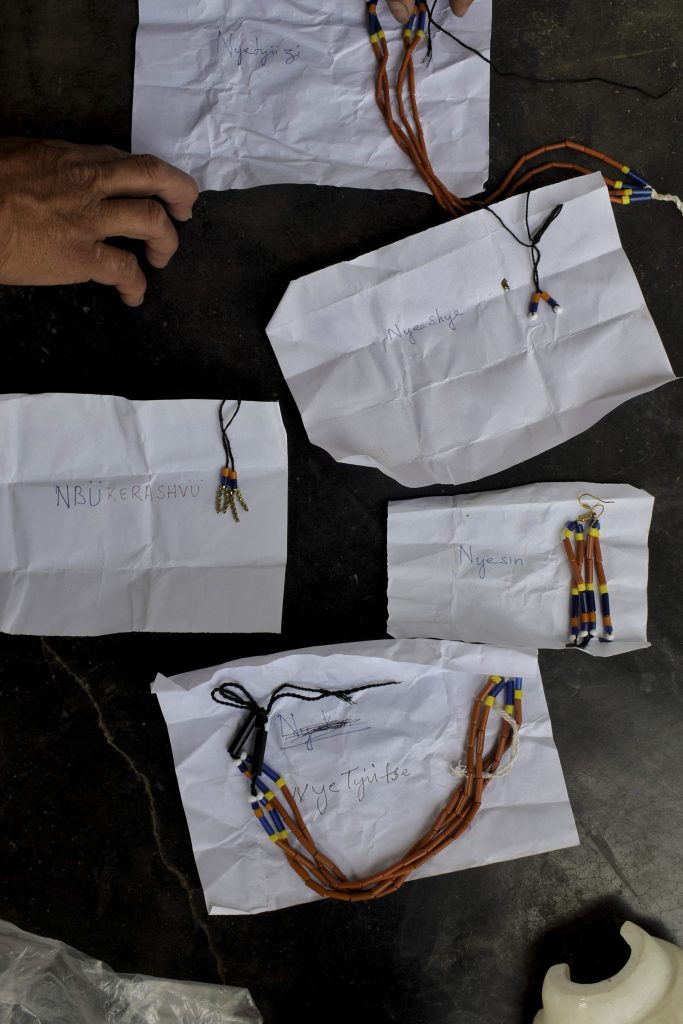
She placed the pot aside and counted the stages on her fingers, the fire crackling between us.
“A woman wears six types of earrings in her lifetime. Nye-so earrings were special and not everyone could wear them. Only the wealthy women did. The wives and daughters of those who owned more land, more livestock, and larger farms to their name.”
As she moved back and forth across the kitchen, sweeping stray ash from the hearth, I huddled closer to the warmth and asked,
“How was the knowledge of jewellery-making passed down in the olden days?”
She paused to stir the rice, then said thoughtfully,
“I may not have all the answers. But jewellery and traditional attire weren’t easily available then. Life was hard.”
She set the ladle down and wiped her hands on her colourful blouse.
“These things were mostly for those who could afford them. So who wore what was very particular, it depended on your status.”
I asked, “From what you’ve seen growing up, do you notice changes in how jewellery is used today?”
Runole nodded, blowing into the fire again as the flames softened.
“Earlier, women wore jewellery heavily and proudly. Almost everyone wore Konmi-tyü and Tyü-zi. Even men wore them.”
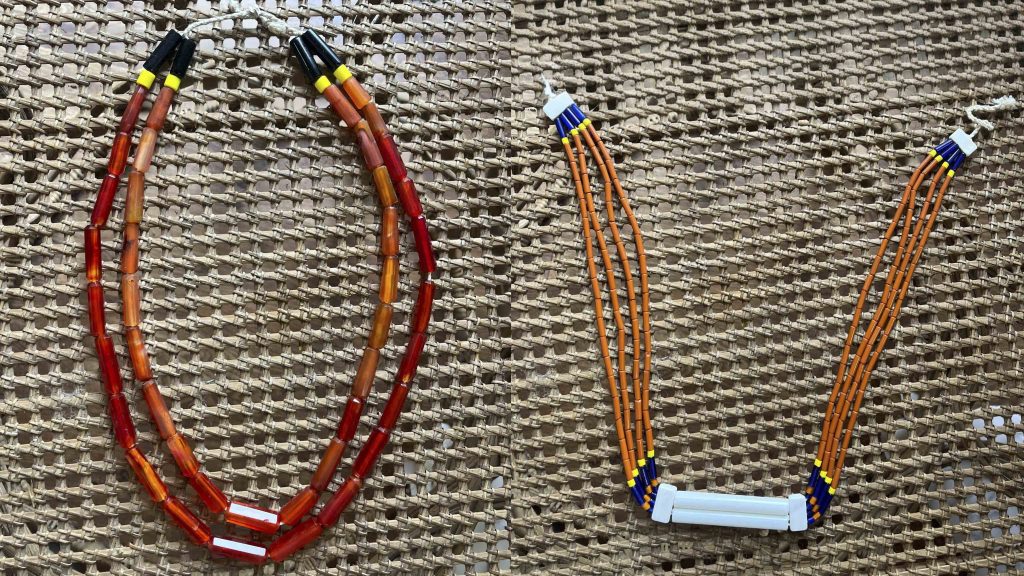
an occasional wear. Photo: Sonye Kent
She chased another chicken out with a sharp clap of her hands.
“Now,” she continued, “we wear them only on exceptional days, festivals like Ngada, our harvest festival.”
When I asked about materials, she laughed softly, scrubbing a plate.
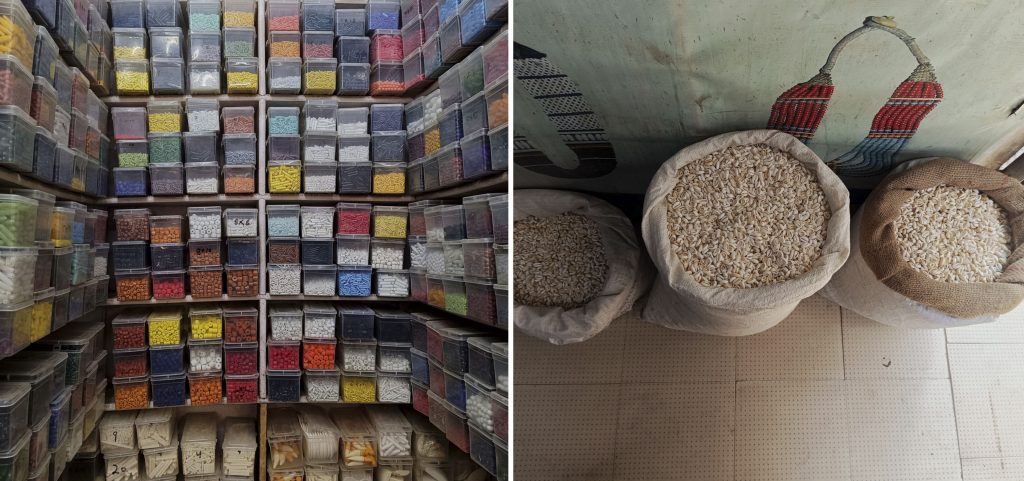
“In the old days, beads came from merchants in Assam. They were hard to find. People used whatever they could, even if the beads were uneven.”
She set the plate on the rack to dry.
“Now plastic beads are everywhere. We choose the best ones. I’ve rearranged my late mother’s Tyü-ro necklace three or four times already, replacing the older beads whenever I find better ones.”
“For someone who has seen all these changes,” I asked, “how do you feel about the shift in the originality of the beads?”
Runole went quiet. She stood for a moment, staring into the fire.
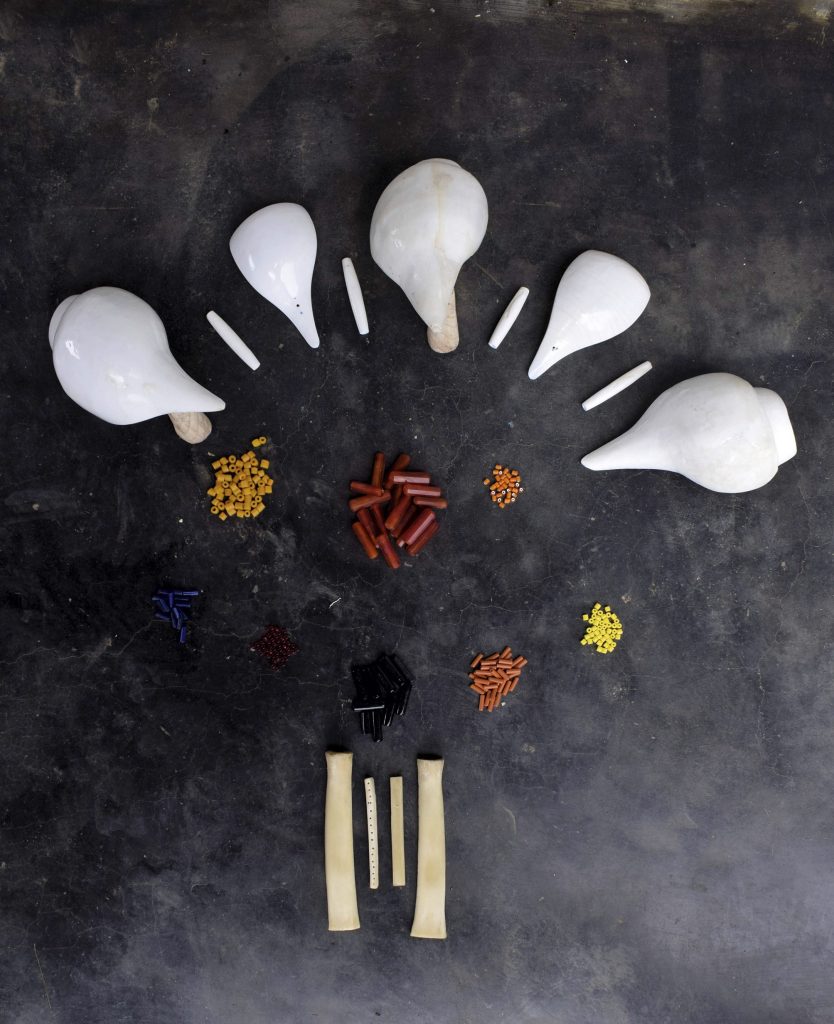
“Today’s jewellery looks pleasing at first glance,” she said slowly. “But the uneven old beads have their own beauty. They carry weight. They carry stories of who we are, where we come from, and the culture that shapes us.”
I asked her then,
“In your thirty-five years of making jewellery, has anyone ever come to you wanting to learn?”
She laughed, wiping her hands again.
“No. People bring jewellery for me to fix or remake, yes. But no one comes to learn.”
With changing fashions and contemporary designs, I asked if these posed a threat to traditional jewellery.
“Yes,” she said firmly, placing the firewood back in order.
“That’s why we warn each other not to change the true meaning of our jewellery. In our village, even in church, we’ve told people not to create jewellery that is only for fast fashion.”
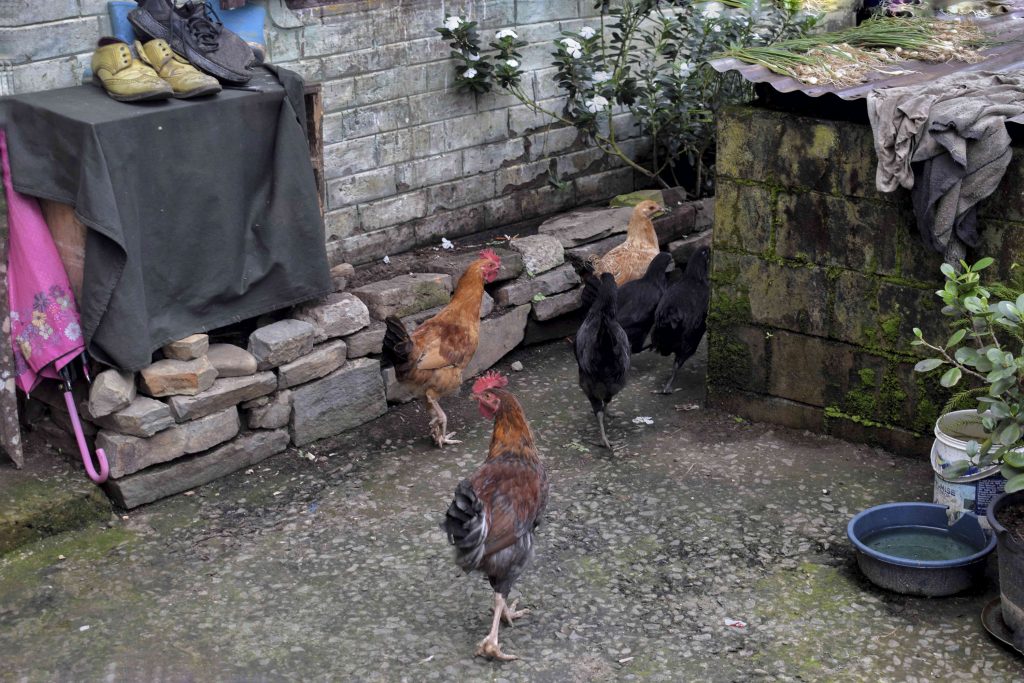
She added, shooing the chickens one last time,
“Jewellery made only for the eyes is discouraged.”
Finally, I asked,
“Do you ever fear that traditional Rengma and Naga jewellery might go extinct?”
Runole shook her head slowly, adjusting the pot over the fire.
“The jewellery may survive if it’s passed down,” she said. “But the art of making it may be lost if it isn’t practiced.”
She looked at me, her face lit by the fire.
“The only way to protect it is to teach our children, its meaning, its use, and how to make it, so they can pass it on again.”
The fire crackled softly, the chickens settled outside, and dusk slipped quietly into the kitchen, carrying her words with it. As I looked out toward the fading horizon, I found myself wondering, how are we, the younger generation, carrying forward this slowly fading art of our culture?
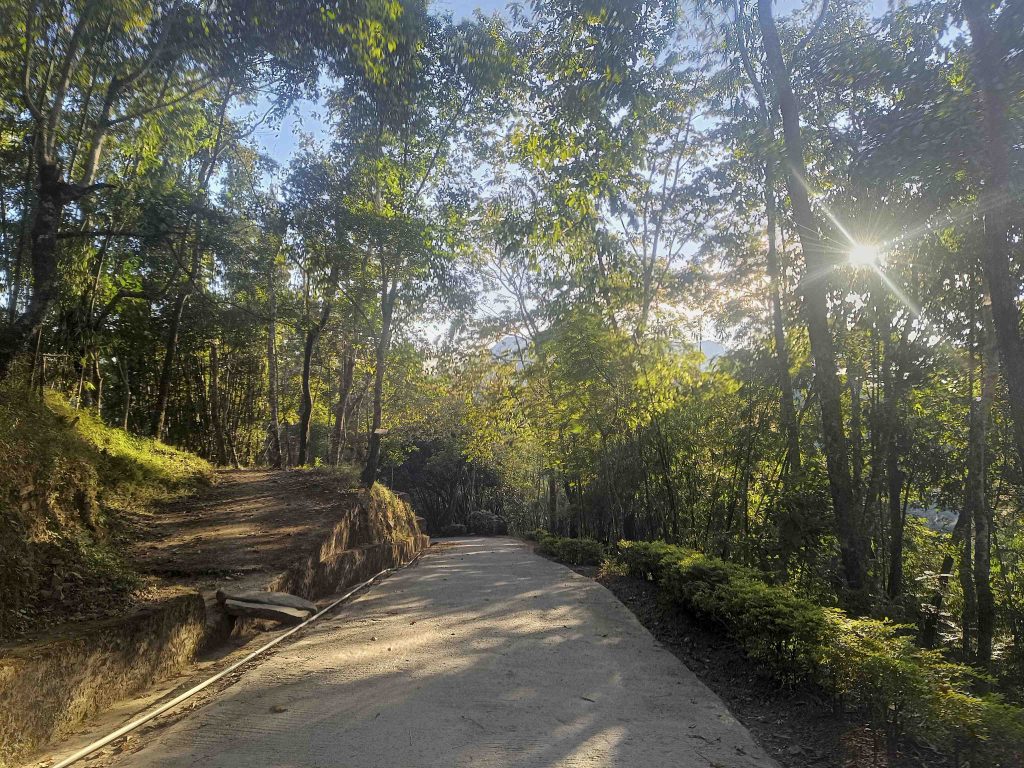
Photo: Kesonye Kath
A Shift in Hands
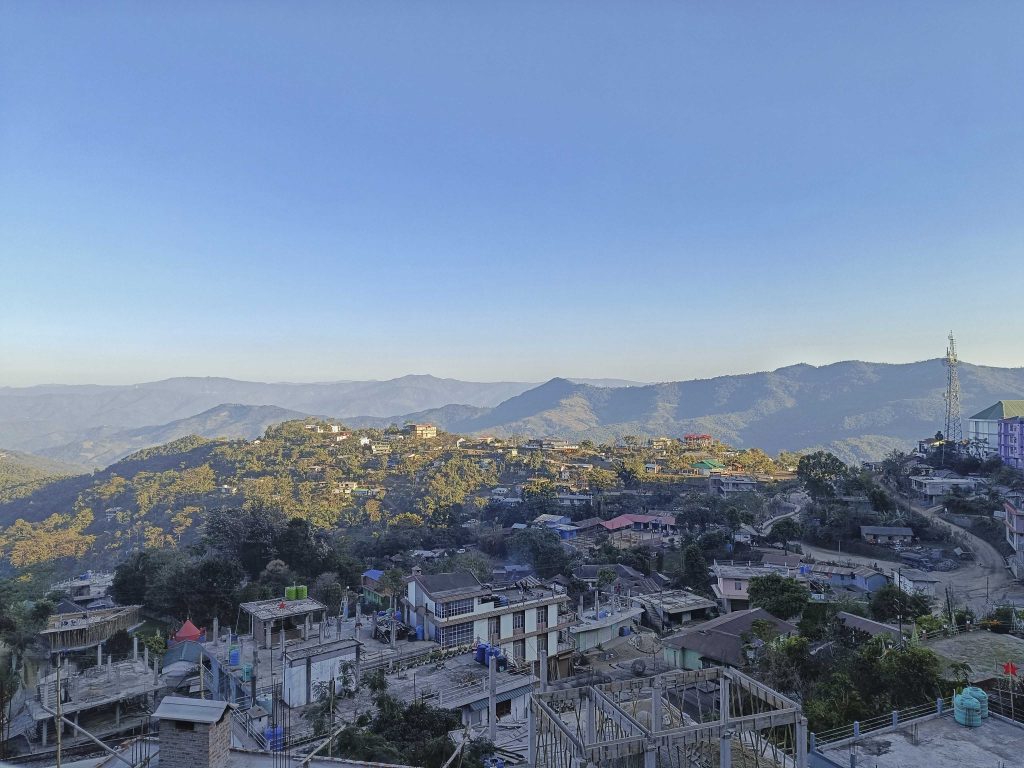
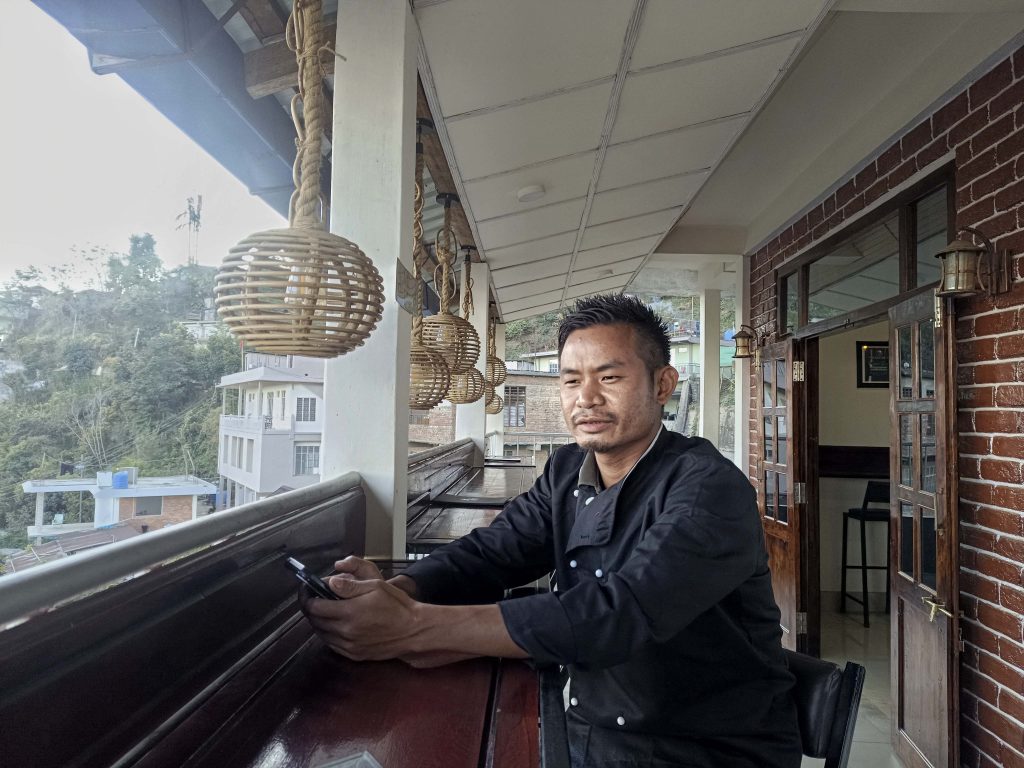
When I arrived at Kepvushen Ka, a restaurant nurtured by two young entrepreneurs from Tseminyu, it was already past three in the afternoon. The winter sun cast a golden glow over Tseminyu New Town, warming the rooftops and winding roads below. Agwasin was still in the kitchen, dressed in a dark apron, moving quietly between stoves and counters. A few customers waited for their orders, the restaurant calm yet alive with soft clinks of utensils and murmured conversations.
Beyond his entrepreneurial life as a restaurateur, Agwasin, a young man in his mid-thirties, finds meaning and solace in crafting beaded jewellery.

We sat in the balcony area, overlooking the panoramic spread of Tseminyu town. The place lived up to its name, a place of friendship. Agwasin leaned back in his chair, composed, certain, and quietly hopeful.
“I’ve always been drawn to beaded jewellery,” he said. “Even when I was younger, I noticed that very few people were actually making them anymore. That absence stayed with me.”
He began practising the craft seriously in 2022.
“When I started,” he explained, “I never saw this as a business. For me, it was knowledge that needed to be learned and passed on.”
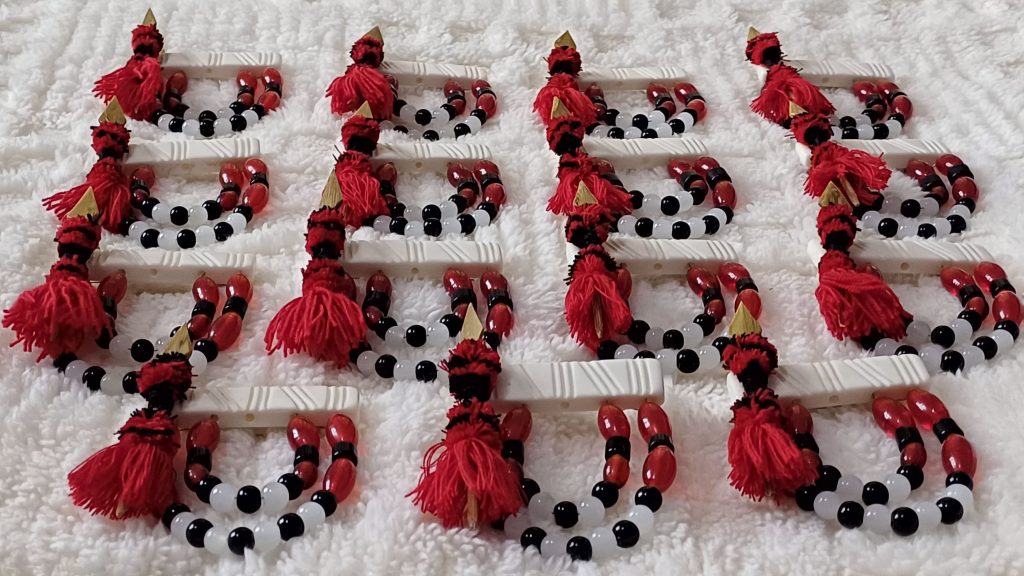
His early focus was on contemporary designs, brooches and necklaces that blended old beads with modern forms to meet the needs of the fast fashion youngsters.
“I wanted to bring the past into the present,” he said. “To create something young people could wear without feeling distant from tradition.”
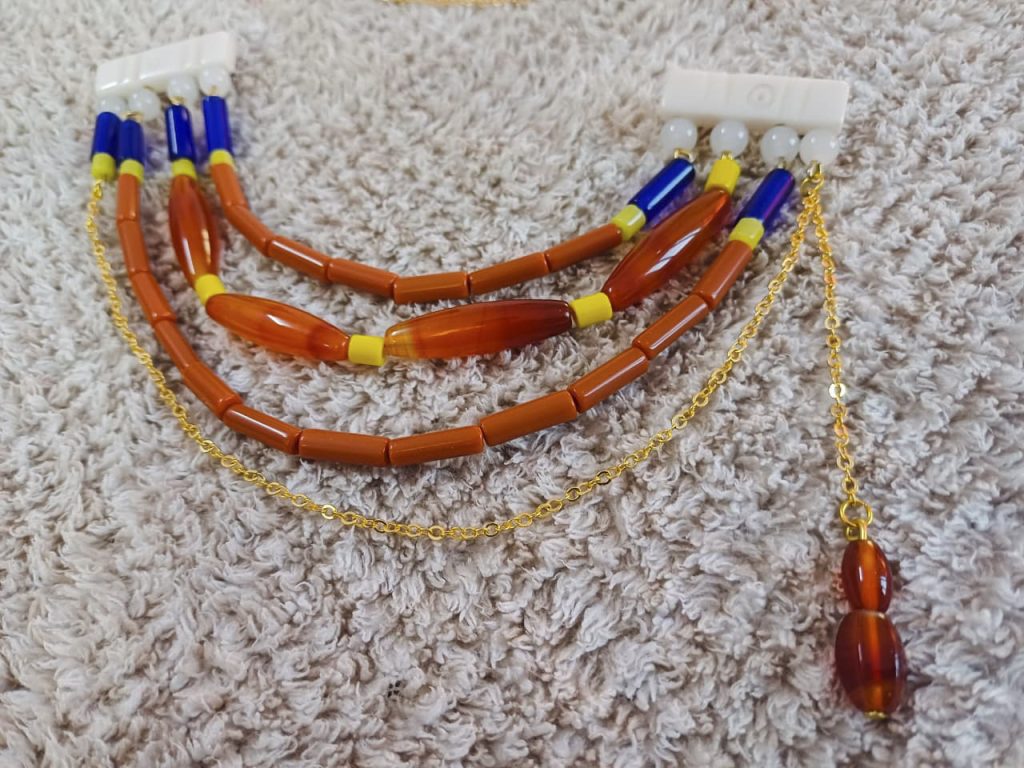
Among Rengma and Naga communities, traditional beaded jewellery has long been expensive both in material and meaning. Many young people today, striving for independence, often seek affordable alternatives.
“That’s why my brooches work,” he explained. “They’re accessible. Young people can afford them, and they can wear them every day, with formal clothes, casual clothes, anything.”
Yet the craft comes with its own challenges.
“Demand is seasonal,” he admitted. “And traditional beads are costly. Balancing affordability and authenticity is always difficult.”
Despite this, Agwasin has witnessed a shift, one that makes him hopeful.
“In the last few years, awareness has grown,” he said. “Through social media, through festivals like Hornbill, young people are seeing our culture again. The interest isn’t blank anymore.”
He paused, then added,
“Earlier, they mostly wanted contemporary jewellery. Now, many are asking about traditional pieces.”
That change has reshaped his practice.
“My focus is slowly shifting back to traditional beaded jewellery,” he said. “Because interest is coming back.”
But awareness, he believes, is still incomplete.
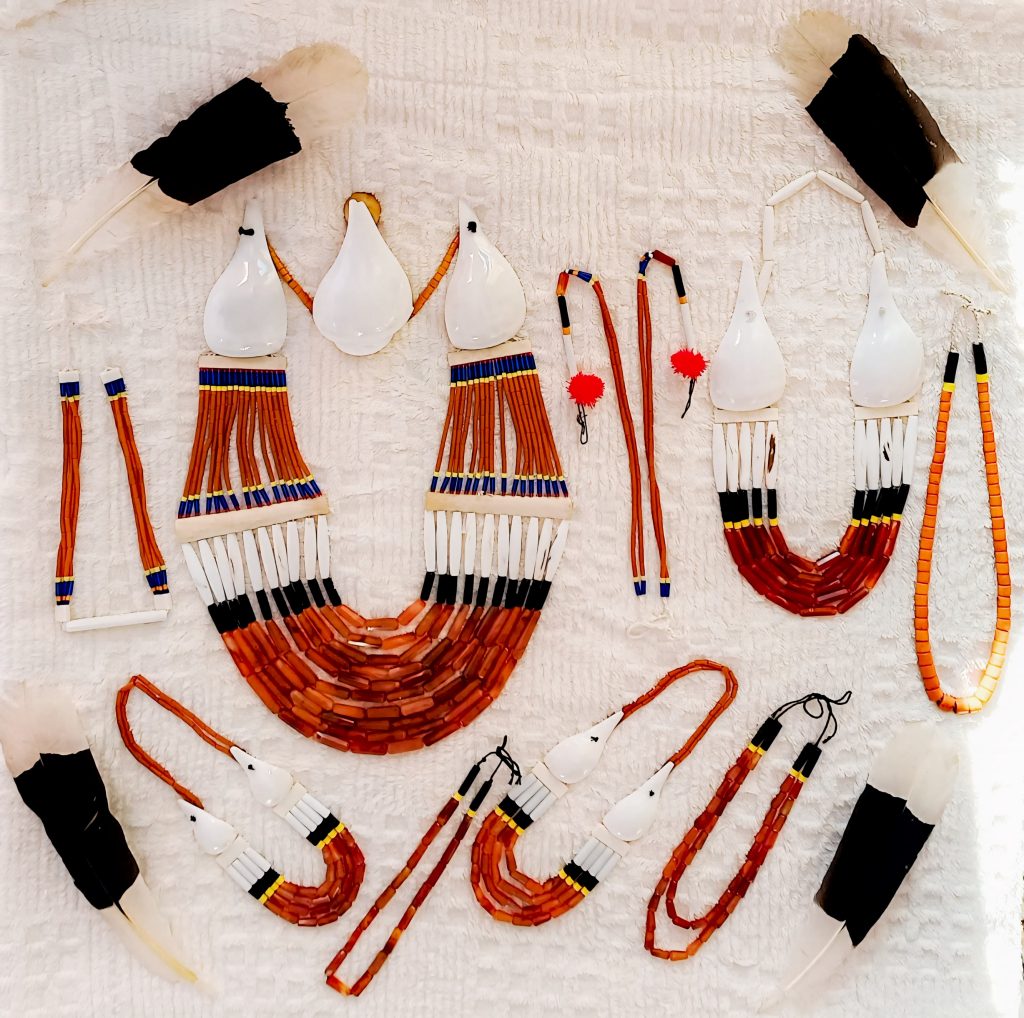
“Many people wear jewellery without knowing what it means,” he said. “That worries me.”
For him, selling jewellery is also a moment of teaching.
“Whenever young people buy from me, I make sure to explain the meaning, why it’s worn, what it represents. I feel responsible.”
He smiled gently.
“I’ve learned so much about my culture through this craft. Protecting it feels like my duty now.”
From Hands That Remember to Hands That Reimagine
In Runole’s kitchen, beads are memory, handled with care, wrapped in cloth, protected from forgetting. By her hearth, the fire burns slow and steady, carrying stories from mothers to daughters, from fields to homes.
In Agwasin’s workshop and restaurant, beads are movement, reshaped, reimagined, worn into everyday life. From his balcony, the town stretches forward, filled with possibility and change.
Between them lies a shared thread.
Runole holds the past with reverence, believing that survival lies in teaching, passing down the meaning, the method, the patience of the craft.
Agwasin holds the future with hope, believing that survival lies in relevance, allowing tradition to breathe, adapt, and be worn again.
One learned the craft out of necessity, to clothe her children.
The other learned it out of absence, to ensure it did not disappear.
Together, they form a continuum.
The beads they handle, uneven or refined, old or newly shaped, are not merely ornaments. They are archives. They remember fields and festivals, morungs and marketplaces, hearths and horizons. They carry the weight of identity and the promise of renewal.
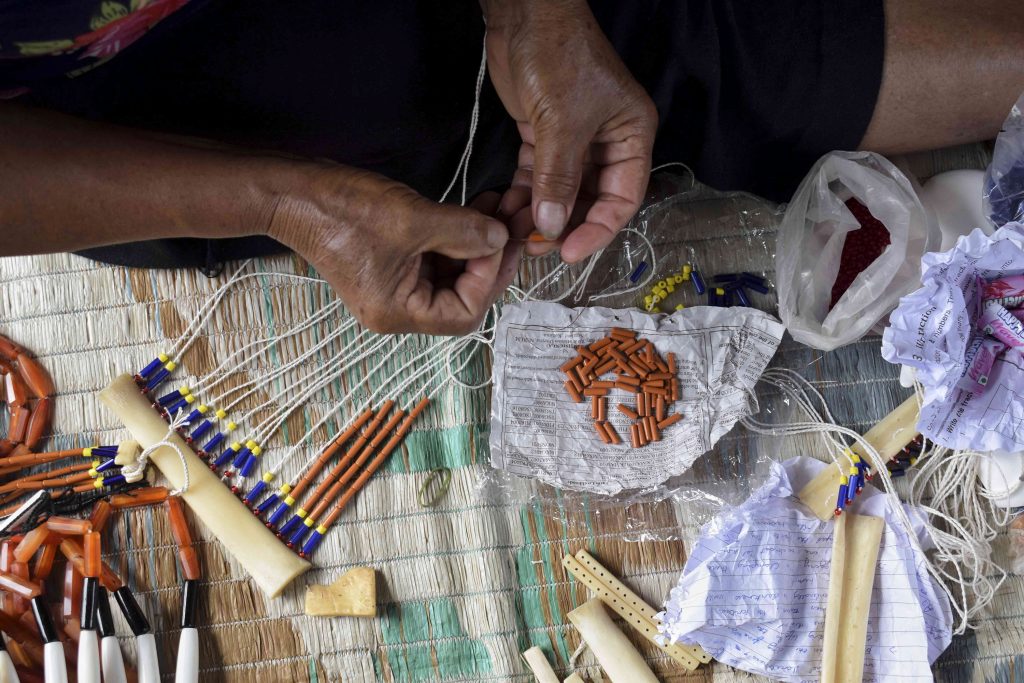
As long as there are hands willing to thread them with care, and voices willing to tell their stories, the beads will not fall silent.
They will remember.
And through them, so will the people.
Meet the storyteller

Kesonye Kath
With a background in engineering and a passion for design and all things creative, Kesonye finds meaning in connecting with her community and the natural world. She is a volunteer with the Kenono Foundation where she works on documentation and story preservation. An avid gardener, she finds peace and inspiration in tending to her plants. On days when not cozied up with her baby daughter, you'll often find her immersed in the pages of a good book. She is currently pursuing a Master’s in Education at Jamia Millia Islamia University.
इंजीनियरिंग की पृष्ठभूमि और डिज़ाइन तथा रचनात्मक चीज़ों के प्रति गहरी रुचि रखने वाली केसेन्ये अपने समुदाय और प्राकृतिक दुनिया से जुड़कर अर्थ पाती हैं। वह केनोनों फ़ाउंडेशन की स्वयंसेवक हैं, जहाँ वह दस्तावेज़ीकरण और कहानियों के संरक्षण पर काम करती हैं। एक उत्साही बाग़बान के रूप में, वह अपने पौधों की देखभाल में सुकून और प्रेरणा ढूँढती हैं। जब वह अपनी नन्ही बेटी के साथ आराम से समय नहीं बिता रही होतीं, तो अक्सर एक अच्छी किताब के पन्नों में खोई हुई मिल जाती हैं। वह वर्तमान में जामिया मिल्लिया इस्लामिया विश्वविद्यालय से शिक्षा में मास्टर डिग्री कर रही हैं।

Voices of Rural India
Voices of Rural India is a not-for-profit digital initiative that took birth during the pandemic lockdown of 2020 to host curated stories by rural storytellers, in their own voices. With nearly 80 stories from 11 states of India, this platform facilitates storytellers to leverage digital technology and relate their stories through the written word, photo and video stories.
ग्रामीण भारत की आवाज़ें एक नॉट-फ़ॉर-प्रॉफ़िट डिजिटल प्लैटफ़ॉर्म है जो 2020 के महामारी लॉकडाउन के दौरान शुरू हुई थी, जिसका उद्देश्य ग्रामीण कहानीकारों द्वारा उनकी अपनी आवाज़ में कहानियों को प्रस्तुत करना है। भारत के 11 राज्यों की लगभग 80 कहानियों के साथ, यह मंच कहानीकारों को डिजिटल तकनीक का प्रयोग कर और लिखित शब्द, फ़ोटो और वीडियो कहानियों के माध्यम से अपनी कहानियाँ बताने में सक्रीय रूप से सहयोग देता है।

You May Also Like

एक सहकारी संस्था का पुनर्जन्म

सेब और पंजों के बीच: जंगल का असली हक़दार कौन?