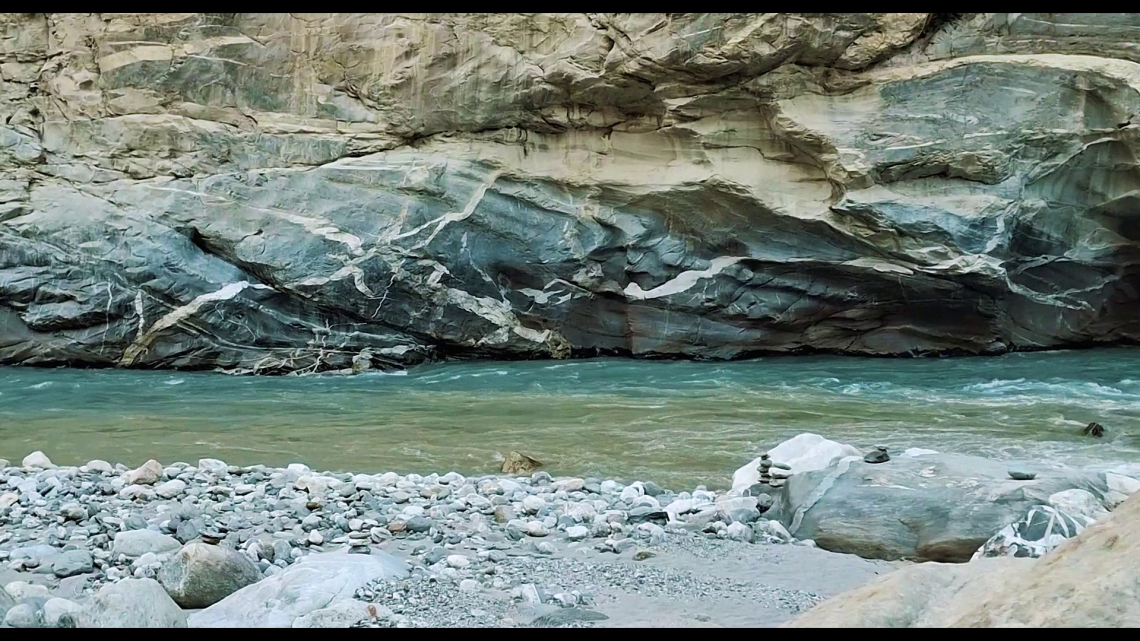
Zungtee – Living With the River
Set in the Himalay, it is a story about the relationship between the people of Kinnaur and the Satluj River, known locally as Zungtee. Flowing through the mountains from the direction of Mansarovar, the river exists not only as a source of water, but as memory, identity, belief, and silence carried across generations.

Storyteller : Sumit Negi (Akki)
Himal Prakriti Fellow
Village: Chansu, Kinnaur,
Himachal Pradesh
Read this story in Hindi

Told through local voices, personal reflections, and cultural memory, the story explores how life in Kinnaur has always moved in step with the rhythm of the river. In the Kinnauri dialect, “Zung” means gold and “Tee” means water, a name inspired by the way the Satluj glows under the evening sun, appearing as if liquid gold is flowing through the valleys. Through songs, rituals, myths, and everyday life, the river continues to shape the region’s emotional and spiritual landscape.
The story moves through questions of history, belonging, and coexistence. It reflects on how early civilisations may have followed rivers in search of life, and how the Satluj became inseparable from the existence of Kinnaur itself. Along its banks live stories of festivals, deities, migration, and ancient connections that still survive in the voices of local people.
At the same time, Zungtee – Living With the River quietly observes a changing landscape. Roads cut through mountains, tunnels enter the earth, and the natural movement of the river begins to shift. As development reaches deeper into the Himalay, the story captures the tension between progress and preservation, not through answers, but through lived experiences and observations from those who have grown up with the river.

Blending culture, environment, memory, and human connection, Zungtee – Living With the River becomes a reflective journey into what it truly means to live beside a river that has witnessed centuries of life, loss, faith, and change.
Meet the storyteller

Sumit Negi
Akki is a passionate learner and cultural thinker from Chansu, a Himalayan village nestled in the highlands of Kinnaur. He is currently pursuing a Bachelor’s degree in Political Science (Honours), led by a deep curiosity about the origins of belief systems, local languages, and mountain traditions. He is drawn to the silent layers of Himalayan life — how people live with nature, how customs carry memory, and how the past quietly shapes the present. He is the initiator of Swachh Fayul, a grassroots movement for environmental awareness and cultural reflection in Himalayan communities. He also contributes to other creative and knowledge-based efforts in the region. Guided by honesty and intention, Akki believes in flowing like water — carving his own path with depth, patience, and purpose.
"अक्की एक जिज्ञासु विद्यार्थी और सांस्कृतिक विचारक हैं, जो किन्नौर की ऊँचाईयों में बसे हिमालयी गांव चांसू से आते हैं। वे वर्तमान में पॉलिटिकल साइंस (ऑनर्स) में स्नातक की पढ़ाई कर रहे हैं। उन्हें आस्था प्रणालियों की उत्पत्ति, स्थानीय भाषाओं और पहाड़ी परंपराओं को जानने की गहरी जिज्ञासा है।अक्की हिमालयी जीवन के उन मौन पहलुओं की ओर खिंचे चले जाते हैं — कि लोग प्रकृति के साथ कैसे रहते हैं, परंपराएं स्मृति को कैसे ढोती हैं, और अतीत किस तरह चुपचाप वर्तमान को आकार देता है। वे ""स्वच्छ फैयुल"" नामक एक जमीनी आंदोलन के आरंभकर्ता हैं, जो हिमालयी समुदायों में पर्यावरणीय जागरूकता और सांस्कृतिक आत्मचिंतन को बढ़ावा देता है। इसके साथ ही वे क्षेत्र के अन्य रचनात्मक और ज्ञान-आधारित प्रयासों में भी योगदान देते हैं। ईमानदारी और नीयत से प्रेरित अक्की का मानना है कि जीवन में पानी की तरह बहना चाहिए — अपनी राह खुद बनाते हुए, गहराई, धैर्य और उद्देश्य के साथ।"

Voices of Rural India
Voices of Rural India is a not-for-profit digital initiative that took birth during the pandemic lockdown of 2020 to host curated stories by rural storytellers, in their own voices. With nearly 80 stories from 11 states of India, this platform facilitates storytellers to leverage digital technology and relate their stories through the written word, photo and video stories.
ग्रामीण भारत की आवाज़ें एक नॉट-फ़ॉर-प्रॉफ़िट डिजिटल प्लैटफ़ॉर्म है जो 2020 के महामारी लॉकडाउन के दौरान शुरू हुई थी, जिसका उद्देश्य ग्रामीण कहानीकारों द्वारा उनकी अपनी आवाज़ में कहानियों को प्रस्तुत करना है। भारत के 11 राज्यों की लगभग 80 कहानियों के साथ, यह मंच कहानीकारों को डिजिटल तकनीक का प्रयोग कर और लिखित शब्द, फ़ोटो और वीडियो कहानियों के माध्यम से अपनी कहानियाँ बताने में सक्रीय रूप से सहयोग देता है।

You May Also Like
थुनैर: हजार सालों से जीवित एक पेड़
वन पंचायत की अहमियत- हम इन्हें क्यों बचाते है