Vijaya – the Story of Cannabis from the Shivalik
When it comes to talk about cannabis, we either think of intoxication or its religious association with India. But this story is about a species of cannabis plant in the valleys of Shivalik where we see a personalised angle to it. Is cannabis only about intoxication? What are male and female cannabis plants? What are the roles of the sun and weather in their genesis? If human beings tried to understand the cannabis plant from an emotional lens; what would the conclusion be?

Storyteller : Haneesh Katnawer
Himal Prakriti Storytelling Fellow
Village Samaal, Kangra District,
Himachal Pradesh
Read this story in Hindi
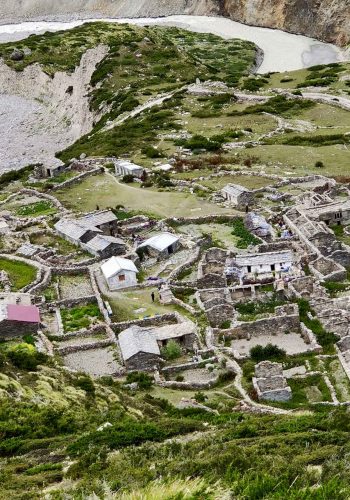
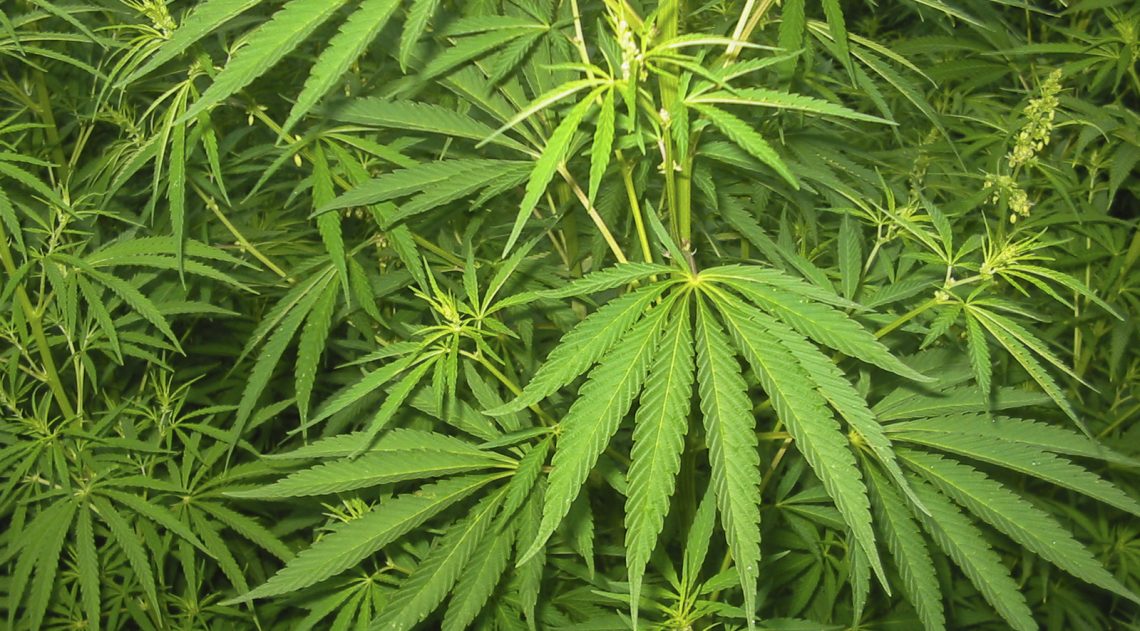
September is underway. The monsoon is nearly over, and in the village of Samal—nestled in the Shivalik valley at about 800 meters above sea level—the cannabis plants lining the roadsides sway in quiet delight. Nourished by the season’s fresh rains, they seem to have grown into a kind of youthful romance. A soft breeze drifts through, carrying their distinct fragrance across the air. The season of union is approaching, and the male plants, restless now, can no longer bear to wait.

“Listen, O winds! Carry my pollen to her, will you? Someone must tell our Vijaya that I can’t wait any longer,” Achyut, the male plant, hummed into the air.
Vijaya heard his call and responded firmly, “Don’t send it yet. The time isn’t right.”
“Then when will the right time come?”
“Just a little while longer… when the days grow shorter and the nights stretch a bit longer.”
“But the winds coming down from the high mountains say that the males and females there have already celebrated their union,” Achyut said, his voice tinged with sadness.
“Perhaps it’s not your pollen she needs, but mine,” said Siddha, his childhood friend growing nearby.
“Oh, get lost. Go ahead and scatter your pollen if you want—ruin yourself. Can’t you see? Her flowers haven’t even bloomed yet, nor have her seeds formed.”
“But it feels like the time has come. Look, the plants in the high mountains have already flowered and set seed.”
“Both of you, be quiet,” Vijaya said at last. “I’m not ready yet, not from within.”

Gazing up at the sky, Vijaya found herself surrounded, not just by Achyut or Siddha, but by male plants on all sides, each ready to send their pollen her way. But her need was not romantic; it was bound to survival. She feared that if she flowered too early and her seeds formed too soon, then by the time they fell in her old age, they would sprout long before the snow arrived. And when the snow finally came, they would still be too small to bloom, her future generations ending before they had even begun.
What she didn’t realize was that in the Shivalik valleys, snow never really falls. And in waiting for it, she failed to see that her own time, too, would one day come to an end, perhaps without children, without any future lineage at all.
“I don’t know what’s gotten into females these days,” Siddha said, scratching his leaves. “I’ve heard that in Parvati Valley, the males have long since settled down.”
“They’re all big shots,” Achyut replied. “Growing proudly in fields. Not like us, stuck by the roadside, cleaning up the smoke from passing vehicles.”
“I’ve even heard that in some places, only females live.”
“Oh really? That sounds like paradise. Imagine! no other males, just me and countless females.”
“But what do they do without males?”
“That’s what I wonder too. But I’ve heard they don’t live very long, and they don’t bear offspring either.”
“Don’t bear offspring? What does that mean?”
“They don’t produce seeds. Just flowers… swaying in their own intoxication.”
“Will you two keep babbling, or will you let me sleep?” Vijaya snapped in anger.
“You should be the quiet one,” Siddha shot back. “You don’t even flower.”
“How can I, just like that? I want to flower too.”
“Then what’s the problem?” Siddha and Achyut asked together.
“I know none of us have ever seen our parents, nor has anyone in our kind,” Vijaya said slowly. “But there’s a voice within me… telling me to wait. Let the nights grow longer. Let the cold deepen. And no matter how much I try, I just can’t make myself bloom.”
“Why not? Tell that voice to be quiet and just flower. What’s the worst that could happen?” Siddha said dismissively.
“I don’t know… What if I flower too early, and your pollen turns into seeds that fall… and then it snows?” Vijaya’s voice trembled. “My child would be gone before it even has a chance to live.”
“Oh, forget all this,” Achyut said, yawning. “Go to sleep, or it’ll get too late.”

“I am the night, and these stars are my scattered dreams—
may my own not drift away before dawn arrives.
I can neither build a home, nor can I fade away;
summer has passed, the rains are gone—
where have the winters wandered off to?” Vijaya murmured to herself.
Six months earlier, in March, when she had first yawned her way out of the soil as a tender sprout, she had seen many like herself being born. For the first six weeks, she didn’t even know whether she was male or female. No mother, no father, no uncles or kin, only others like her, growing alongside. And yet, somewhere deep within, she knew: when the nights grew longer, she would have to bloom, to build her home.
Waiting for that long night, October had now arrived. Achyut and Siddha knew they could not wait any longer. It was nature’s irony, they were ready and couldn’t wait, while Vijaya, though not ready, could afford to.
“I lived even through the monsoon,
but I won’t last until your season arrives.
I won’t die—just give everything I have, and leave empty.
I won’t fall—I’ll scatter, becoming the wind.
I don’t wish to go… but in the season of falling leaves, I will fade away.”
With these words, Achyut released his pollen into the air. It drifted with the wind, brushed against Vijaya’s leaves, and fell silently to the ground.

Siddha stirred his roots, offering Vijaya a final salute, and released his pollen into the wind. Watching this, Vijaya felt an even deeper sorrow settle within her. All the male plants had let go of their pollen now, and even if the nights were to grow longer, her flowers would never form seeds.
By the time November arrived, nearly all the males had withered into dry wood and died. Vijaya had grown old; her once-green body was fading into yellow.
“O night, why won’t you grow longer?
I am no longer as green as I once was.
All my companions have scattered and gone—
why am I left.. a barren, aging bud?”
From the other aging females nearby, she had heard that in the high mountains, everyone had already formed seeds, burying them into the earth for the coming spring. And then, beneath a blanket of snow, the plants had quietly died.
But here, neither were the nights growing longer, nor was any snow arriving. Instead, cold winds drifted downwards, spreading a thick veil of fog across the entire Shivalik valley.

“Has the time finally come? It’s been four hours since morning, and the sun hasn’t appeared at all,” Vijaya wondered to herself.
The next day too, the sun did not rise, and Vijaya felt a quiet thrill bloom within her.
“My season has arrived. Where are you, Achyut? Where are you, Siddha?”
A dense fog had settled into the days. For the next three to four weeks, she gathered all her strength and tried to bloom, but her flower never grew fully. Age had caught up with her, and the sunlight she needed during the day never reached her. Slowly, even her stored nutrients began to fade away.
Now she understood, it was too late. She wished she could tell the generations to come not to wait endlessly for the “right” season. But she no longer had the strength. The fog lingered every day, and without sunlight, she could no longer make the food she needed to survive.
She looked at her yellowing leaves. On one of them, a faint trace of Achyut’s pollen still clung.
“Listen, O winds… carry my pollen to her… someone must tell our Vijaya that I cannot wait any longer…”
The memory of his words returned, and a final resin stirred within her flower. Gathering every last bit of strength, she tried to lift her leaf and bend her flower downward, but her body failed her.
After a while, she tried again… and failed again.
Four more days passed. Deep within, she knew she could not hold on any longer. Even the small strength needed to lift a leaf had left her.
Then, a sudden gust of wind came, and tore away the leaf that still held Achyut’s pollen, lifting it into the air.

“Perhaps this is how I end, a life without love, without a companion, without a child,”
she whispered, and with that, she stopped drawing water up through her roots.
Vijaya’s story was almost over when the leaf, carried by the wind, slowly drifted down, and came to rest right upon her flower. It was one final chance. Without a moment to lose, she began forming seeds.
The fog thickened around her, but at last, she had been given a purpose, her first, and her final one. In just three weeks, she managed to form her seeds. And then, almost suddenly, she turned completely yellow.
She had to die, so that her seeds could fall to the earth, sink into the soil, and awaken again in March. Into them, she poured everything she had left, storing enough nourishment for the months to come.
By the time the first two weeks of December had passed, Vijaya’s moment to bid farewell to the world had arrived.

In a way, her whole life had been spent waiting. It was long, marked by struggle. Unlike the plants of the higher mountains, short-lived yet celebrated, hers was a quieter existence. And yet, perhaps it was her patience, her quiet courage, that would make the seeds to come stronger.
Her seeds were ready now. Slowly, she stopped sending water up through her roots. She was dying, but without dying, she could not return her seeds to the earth. And so, as she turned from yellow to brown, her seeds finally fell, sinking into the soil.
With that, the last cannabis plant of that year in the Shivalik valley was gone. An entire generation had come to an end. But Vijaya, and the other females like her, had secured a future.
But this is only the beginning of the story… Stay with it, because the next part will arrive soon, where we will learn more about Vijaya and Achyut, and also about the long, layered relationship between humans and the cannabis plant.
*A personal note:
We often look at the cannabis plant through many different lenses, some see it as an intoxicant, some as an offering to Shiv, some as medicine, and others as a cash crop. But perhaps the most important thing is to first understand it simply as a plant.
Why is it that in the higher mountains, people say the finest charas is found? Why do cannabis plants grow along roadsides in Himalayan valleys? Why does the plant produce intoxicating compounds at all? Why, in our story, did Vijaya need pollen from Achyut or Siddha? And what is the role of female plants in the high mountains?
To understand this, we need to understand pollination.
Take wheat as an example, it does not depend on external pollination because it is a bisexual plant. This means a single flower contains both male (stamens) and female (carpels) reproductive organs. Such flowers, often called “complete” or “perfect” flowers, can self-pollinate.
Cannabis, however, is different. It is a unisexual (dioecious) plant, male and female reproductive parts are found on separate plants. This means male plants produce pollen, and female plants produce flowers that require that pollen to form seeds.
So in our story, Vijaya could never have formed seeds without receiving pollen from a male plant.
There is another layer to this. Cannabis is a Himalayan plant, and its life cycle has evolved in response to that environment. For seeds to form, the female must first produce flowers, and she does so when environmental cues suggest that winter, and eventually snow, is approaching. After flowering comes seed formation, which depends on pollen from male plants.
Through the process of cross-pollination, carried by the wind, many cannabis plants have spread from the high mountains down into the valleys. Yet even in these valleys, the female plant still “waits” for the signals of snow that never truly arrive. That quiet mismatch, between instinct and environment, is what lies at the heart of Vijaya’s story.
When Siddha and Achyut speak of places in the high mountains where only female plants grow, they are referring to a particular kind of cultivation. Farmers there often manage two types of crops, one for producing charas, and another for seed production.
Charas is the resin that comes from the flowers of the female plant. Farmers gently rub the flowers to collect this resin. Interestingly, this resin naturally helps trap airborne pollen, leading to seed formation. But if female plants are kept isolated from male plants, they continue producing resin without forming seeds, resulting in higher-quality charas.
This entire ecological system, of male and female plants, wind, altitude, and timing, is shaped not just by nature, but also by social, legal, and regional realities.
Meet the storyteller

Haneesh Katnawer
Haneesh Katnawer aka Katna is a social entrepreneur, inventor, and ghost writer. He is the co-founder of Himalayan Hemp Industries Pvt. Ltd. and Himalayan Hemp Research Foundation, a social entreprise working in preserving the indigenous variety of cannabis and hemp in the Himalayan Range. He is one of the inventors of world’s 1st reusable cannabis hemp sanitary pads. He has a knack to dwell in topics often less spoken and roads less travelled. With an experimental, experiential, and purposeless mindset, he believes in living life with an objective of trying something new every day.
हनीष कतनावर उर्फ़ कटना एक सामाजिक उद्यमी, आविष्कारक और घोस्ट राइटर हैं। वे हिमालयन हेम्प इंडस्ट्रीज़ प्राइवेट लिमिटेड और हिमालयन हेम्प रिसर्च फ़ाउंडेशन के सह-संस्थापक हैं एक सामाजिक उद्यम जो हिमालयी क्षेत्र में भांग और हेम्प की देशी किस्मों के संरक्षण पर कार्य करता है। वे दुनिया के पहले पुनःप्रयोग योग्य भांग आधारित सेनेटरी पैड्स के आविष्कारकों में से एक हैं। उन्हें उन विषयों में गहराई से उतरने का शौक है जिन पर आमतौर पर कम बात की जाती है और उन राहों पर चलने का जुनून है जो कम चली गई हैं। एक प्रयोगात्मक, अनुभवात्मक और निःस्वार्थ मानसिकता के साथ वे मानते हैं कि जीवन का उद्देश्य हर दिन कुछ नया आज़माना होना चाहिए।

Voices of Rural India
Voices of Rural India is a not-for-profit digital initiative that took birth during the pandemic lockdown of 2020 to host curated stories by rural storytellers, in their own voices. With nearly 80 stories from 11 states of India, this platform facilitates storytellers to leverage digital technology and relate their stories through the written word, photo and video stories.
ग्रामीण भारत की आवाज़ें एक नॉट-फ़ॉर-प्रॉफ़िट डिजिटल प्लैटफ़ॉर्म है जो 2020 के महामारी लॉकडाउन के दौरान शुरू हुई थी, जिसका उद्देश्य ग्रामीण कहानीकारों द्वारा उनकी अपनी आवाज़ में कहानियों को प्रस्तुत करना है। भारत के 11 राज्यों की लगभग 80 कहानियों के साथ, यह मंच कहानीकारों को डिजिटल तकनीक का प्रयोग कर और लिखित शब्द, फ़ोटो और वीडियो कहानियों के माध्यम से अपनी कहानियाँ बताने में सक्रीय रूप से सहयोग देता है।


You May Also Like

From Khanor to Seek: Threads of Memory

जीवन में कोई भी राह कब सीधी होती है?