
The Unheard Verses of Chandrakantha
When the narrator first hears a folk song celebrating a woman named Chandrakanta, she assumes it’s just another forgotten story from the mountains. But as she begins asking questions, she discovers that everyone knows only half the truth and avoids the other half. Through scattered memories, hesitant answers, and sudden silences, a more complicated life begins to emerge behind the melody. What society chose to sing and what it chose to hide become two different stories. And in uncovering the missing pieces of Chandrakanta’s life, the narrator is forced to confront the deeper question: why do some women’s truths disappear into silence?

Storyteller : Tamanna Negi
Himal Prakriti Storyteller
Village Kamru, Kinnaur District,
Himachal Pradesh
Read this story in Hindi
“Matric paas lan lan, namang Banthin Chandrakanta…”
A beautiful girl named Chandrakanta has passed matric.
I was sitting behind the driver’s seat with my sisters when my elder sister played the song inside the car. We were driving through the winding roads of the Sangla valley, mountains rising on both sides and the Baspa River shimmering below. We were talking with each other, which song to play next. When that line immediately caught my attention. She passed matric. Chandrakanta.

Most songs I had heard about Kinnauri women were stories of sacrifice, marriage, and tradition like the story of Thakur Moni and Yumdasi. But here was a song celebrating a woman’s education. That felt different. That stayed with me.
When I asked my sister about it, she told me, “It was released just a year ago. There are two stories in it—one about a male teacher named Ram Ratan, and the other about a woman named Chandrakanta, who passed her matric exam.”

I was immediately curious. How did she manage to achieve that at a time when so few women even went to school? But my sister didn’t know much beyond the lyrics. The song celebrated her success. But maybe there’s more to it? From the song, I learned that Chandrakanta was from Sangla, while I belonged to Kamru. Maybe that’s why her story had never reached our household. It seemed that only the people of Sangla still remembered her—not through memories or stories, but through a song that carried her name.

Sangla and Kamru are neighbouring villages, only a few kilometres apart, yet their worlds often feel centuries away from each other. Kamru, where I am from, still holds the echoes of its ancient fort, the wooden carvings of deities, and the temple of Lord Badrinarayan standing guard over the valley.

Old slate-roofed houses cling to the slopes, and narrow paths wind between apple orchards that turn crimson in autumn.

But during Chandrakanta’s time, in the 1950s, life here was far quieter and more contained. The Sangla valley, framed by snow-covered ranges and the murmuring Baspa river, was not yet connected by proper roads.

Only a few government schools existed, mostly in the larger villages. Education for girls was rare, almost unheard of beyond the primary level. Most families believed daughters should learn household work instead of lessons from books.
My grandmother often said, “Those who studied too much forgot their duties.” It was not malice; it was the way people had learned to keep order.
Women who studied were admired in songs, not in reality. So, when someone like Chandrakanta passed the matric exam, it was not just her success; it could have been a small rebellion against what society expected of her. However, despite being so close, her story was barely known in my home. But those who married from Sangla to Kamru, knew about this story. About the struggle behind her success.
I began asking my mother, father, and grandmother, but none of them had an answer. In Kamru, people mostly talk about another local figure, Thakur Moni. Chandrakanta seemed like a name the song carried, not the people. Still, questions stayed with me.
From what little I have heard, Chandrakanta must have studied in Sangla’s government school, one of the very few in the valley back then. Perhaps she had to walk long paths from her home every morning, carrying her books wrapped in a cloth, while others her age stayed back to help their mothers in the fields.
After passing matric, she became a teacher, a position both respectable and rare. Yet, what must that have felt like for her? To stand in a classroom full of children and teach lessons, knowing she had already crossed a boundary most women weren’t allowed to approach.
But my neighbour chachi, who had married from Sangla to Kamru, knew about this story. She had two children, both boys. She is a widowed woman, who lost her husband in a car accident. She was 40 when she lost her husband.
One afternoon, she came to our home to go with my mother to the mahila mandal meeting, which is held every 10th of the month in our village temple. She was sitting with my grandmother while waiting for my mother to get ready. They were talking about the upcoming weddings in Kamru. I saw a chance and asked her about Chandrakanta’s story.

She paused for a moment, then said, “She was a tehsildar’s daughter and managed to pass the exam. But later, she married an outsider, a Sardar.”
A question immediately came to me, “But this isn’t in the song?”
She replied, almost casually, “Why would this be in the song? It’s not a good thing to mention that she ran away and married a Sardar.” She said it as if it were the most obvious thing in the world.
I tried to ask her more, but she showed no interest in continuing the topic. My grandmother, who had been listening quietly, suddenly asked, “Chandrakanta haney shaadi lan lan ey?” (Did she get married like this?) I wasn’t surprised when she asked that, both her maternal and paternal homes were in Kamru. Marrying an outsider during that time is not considered a great choice.
Soon after, my mother and chachi left for their mahila mandal meeting, and I sat there, still thinking about what I had just heard.
How did she pass matric when hardly any woman studied?
Where did her courage come from?
And why wasn’t her story spoken about?
Why didn’t the song mention her marriage?
The chance to learn more came during a visit to my nani’s home in Batseri, another village in the Sangla valley. Batseri sits on the left bank of the Baspa River and is surrounded by lush deodar and pine forests, apple and apricot orchards, and traditional wooden houses and blend of Hindu and Buddhist cultures. The distance between Sangla and Batseri is approximately 7 km by road, taking about 15–20 minutes to travel.

One evening, while I was helping my maami ji in the kitchen rolling rotis and chatting, I remembered she is from Sangla who married here in Batseri. I asked her about Chandrakanta, maybe she knew something more than that song.
“Naney ji,” I asked, “have you heard the song Banthin Chandrakanta?”
She nodded. “Yes, I have.”
“What was her story?” I asked, hoping for a clue.
Without looking up, she said, “Her father was a tehsildar. She belonged to a reputed family from our caste, the upper caste. That privilege gave her a rare chance. She studied, passed matric, and became a teacher.”
I asked eagerly, “So she taught for a long time? In which school did she teach? Where is she now?”
She paused, then looked straight at me and said quietly, “She died by suicide. Society didn’t accept the man she married. Even her parents didn’t support her.”
Her words left me speechless. “She married a sardar right? An outsider. But how did it lead to her committing suicide?”
She said not giving me proper attention, “Her husband’s family was poor and didn’t treat her well. She had two children, yet she ended her life in Sutlej river in Rampur. At least she should’ve thought about her children.”
I asked the same question, “But why isn’t this mentioned in the song?”
She said leaving the kitchen, “why would they mention these shameful things?” That was all my maami would say. And that silence said enough.
Rampur Bushahr, a historic town in the Shimla district of Himachal Pradesh, rests quietly on the banks of the Satluj River, about 130 kilometers from Shimla and 93 km away from Sangla.

Once the winter capital of the princely state of Bushahr, Rampur was more than just a royal retreat; it was a gateway for traders journeying between India and Central Asia along the old Hindustan-Tibet Road. Even today, echoes of that bustling trade come alive each year during the famous Lavi Fair, when merchants from across the Himalayas gather to exchange goods, stories, and traditions.
I still had many questions.
Why did she commit suicide in Rampur?
Where did she teach?
Why isn’t the song telling the whole truth?
That moment made me think about the difference between the song and the truth. The melody celebrates her success, the exam she passed, the pride she brought. But the story reveals the pain the community ignored.
It was not her education that society could not tolerate, it was her choice in marriage.
I have seen this closely. Women are ‘allowed’ to study until society decides it’s time to marry. Then education pauses. Dreams shrink.
My mother’s life reflects this. She was in her first year of college, a volleyball player, when she learned her marriage was fixed. She had no right to refuse. She was 23. I remember my mother telling me about the day she went home to Batseri from Solan during her college break. She was in her first year, full of plans for what came next, when her parents suddenly told her she was to be married.
My father was a teacher then, a respected post, one that few families could turn down. There were no arguments, no questions, just a quiet acceptance that this was how things were. “I had no right to refuse,” she once said softly. And so, she didn’t. She simply accepted it.
Her younger sister, just six years apart, became a teacher, ‘allowed’ to study and work. The difference wasn’t in ability; it was in timing. Society shifts slowly, deciding who gets to continue and who must stop.
“Sometimes it isn’t about what a woman can do,” my mother once said, “it’s about when society decides she’s allowed to do it.”
Chandrakanta’s journey was exceptional not just because she studied, but because she chose love. She crossed an invisible line that women were not supposed to cross.
I tried once again to find answers to my questions and called my maami one day. I asked her many things, but she replied to only a few.
“How did Sardar and Chandrakanta meet?” I asked.
There was a long pause on the phone before she finally said, “I don’t know about that.”
From my mother, I later learned that my maami ji’s mother was also from Sangla and had married within Sangla itself. So, I asked again, “Does aapi (grandmother) know about this?”
“No,” she said. “She knows about Ram Ratan, not Chandrakanta. You should ask about him instead; his story is more inspiring. He became a teacher during that time too. He was from Rarang. He inspired many others to study.”

The way she said it, soft but firm, felt like a wall being built between us. It wasn’t just disinterest; it was fear. Fear of what people might say if this story was spoken aloud again.
In Kinnaur, outsiders have always been viewed with suspicion. Even now, people fear cultural change and “environmental harm” brought by those “not from here.” The elders often say that outsiders don’t understand the rhythm of the mountains, the respect for deities, the customs that govern festivals, or the balance that keeps our small communities united. They worry that with outsiders come new ways of living, loud music during festivals, concrete houses replacing wood and stone, and a fading of traditional dress and dialect.
Environmental concerns run just as deep. Plastic waste along the rivers, over-tourism, and careless construction have already begun to scar the fragile slopes. For many locals, protecting the land also means protecting a way of life. So, when someone from outside settles here, it’s not just about a new face in the village, it feels like a slow erosion of the world they’ve always known. And it is probably this fear that led to presenting an incomplete picture of Chandrakanta’s story.
As I tried to understand more, I noticed something else, her story does not travel through homes, only through the song. Before listening to it, I didn’t even know she existed.
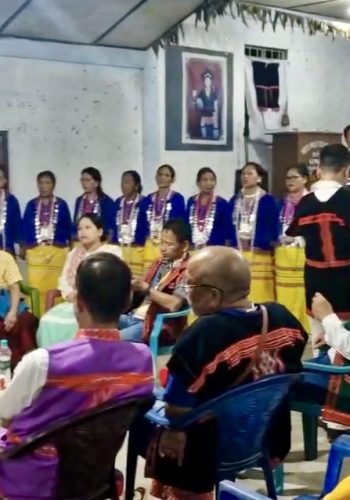
That made me think: The song “Banthin Chandrakanta” is now sung during local gatherings, sometimes played at weddings or festivals — its melody light, almost celebratory.

Photo: Tamanna Negi
No one really knows who first composed it; some say an old folk singer from Sangla, others believe it began as a poem written in her memory.
In mountain cultures like ours, stories often live through music, not through books. A song travels faster than truth. It carries what people want to remember, the glory, the pride and quietly leaves behind what they wish to forget. That is why Chandrakanta’s courage as a student became the heart of the song, while her pain as a woman remained buried in silence.
Maybe people feared that telling her full story would disturb the comfort of their beliefs. Maybe they wanted her to remain a symbol of success, not a reminder of what society once denied her.
Was her story rare?
Or was its documentation rare?
Many women resist quietly. There is an elderly woman in my village who never married. When I once asked my grandmother why, she said the woman couldn’t marry at the “right age” society dictated and so she now lives alone in the old house. She doesn’t like to talk much. But my mother once told me when we were packing apples for me during October.
She said “She feels lonely. Her brothers, neighbours sometimes visit her and she cries every time someone comes over. She has cows, her brother brings her necessary things, but after all her brothers are also married and have their own lives.”
“Why didn’t she get married?” I asked.
“She is the elder sister. Her responsibility as an elder sister came first. She married her brothers and settled them. Their parents passed away early. Her right age to marry at that time had passed.”
Her independence looks like isolation through society’s eyes.
As a young woman myself, Chandrakanta’s story makes me reflect deeply.
Why are our choices — whom we love, when we marry, whether we work, still policed? Why must a woman’s freedom fit within rules set by others?
Her death deserves to be acknowledged, but it should not define her. To me, her courage matters more.
She studied when few girls studied. She built a profession when society doubted women’s capabilities. She married for love, knowing the risks.
These are acts of bravery.
Today, when I hear “Banthin Chandrakanta,” I listen with a different understanding. The song remembers only her success, while the struggles that shaped her remain unspoken. This selective memory, celebrating the achievement but erasing the pain, is another kind of injustice.
And yet, when I look around me, I see that traces of her courage still live on. My mother, for instance, never got to decide when she would marry, but she still speaks proudly of how she once played volleyball for her college team, a small but bold step for a young woman from Batseri at that time. Her younger sister became a teacher, continuing the dream my mother had to leave behind.
Women today in Kinnaur are slowly redrawing these boundaries. Some run small businesses, some teach, some travel to cities for higher studies. They may still face whispers, but unlike before, they have begun to answer back. The conversations are changing, in schools, in families, even in village temples where women’s voices once went unheard.
Chandrakanta’s story reminds me that courage doesn’t always look grand. Sometimes, it is in choosing to study a little longer, to love whom you wish, or to speak when silence is easier.
By telling her story today, we reclaim what was erased —
Her strength.
Her dreams.
Her voice.
And perhaps, in remembering her fully, we also make space for the many Chandrakantas still waiting to be heard.
Meet the storyteller

Tamanna Negi
Tamanna Negi is a curious writer and cultural storyteller from Kamru, a Himalayan village in Kinnaur, Himachal Pradesh. A student of Arts, she finds her roots in the quiet rhythm of mountain life and the unspoken strength of its women. Deeply moved by temple festivals and the traditions surrounding them, she believes in writing to preserve culture and express imagination. Though not active in projects yet, she dreams of building something meaningful through words, something that helps others reflect, remember, and reconnect. For Tamanna, the mountains are more than home; they are her language, her lens, and her legacy in the making.
तमन्ना नेगी हिमाचल प्रदेश के किन्नौर जिले के हिमालयी गांव कामरू से आने वाली एक जिज्ञासु लेखिका और कहानीकार हैं। कला की छात्रा तमन्ना को पहाड़ों के शांत जीवन और वहाँ की महिलाओं की अनकही ताकत में अपनी जड़ें दिखाई देती हैं। मंदिरों के त्योहारों और उनसे जुड़ी परंपराओं से वे गहराई से प्रभावित हैं। तमन्ना का लेखन ईमानदारी और रचनात्मकता से प्रेरित है, ये दोनों मूल्य उनके लिए बहुत मायने रखते हैं। हालांकि वे अभी किसी परियोजना में सक्रिय रूप से शामिल नहीं हैं, लेकिन उनका सपना है कि वे शब्दों के ज़रिए कुछ ऐसा रचें जो लोगों को सोचने, याद करने और अपनी जड़ों से फिर जुड़ने में मदद करे। तमन्ना के लिए पहाड़ सिर्फ उनका घर नहीं, बल्कि उनकी भाषा, नज़रिया और एक विरासत हैं, जिसे वे आकार दे रही हैं।

Voices of Rural India
Voices of Rural India is a not-for-profit digital initiative that took birth during the pandemic lockdown of 2020 to host curated stories by rural storytellers, in their own voices. With nearly 80 stories from 11 states of India, this platform facilitates storytellers to leverage digital technology and relate their stories through the written word, photo and video stories.
ग्रामीण भारत की आवाज़ें एक नॉट-फ़ॉर-प्रॉफ़िट डिजिटल प्लैटफ़ॉर्म है जो 2020 के महामारी लॉकडाउन के दौरान शुरू हुई थी, जिसका उद्देश्य ग्रामीण कहानीकारों द्वारा उनकी अपनी आवाज़ में कहानियों को प्रस्तुत करना है। भारत के 11 राज्यों की लगभग 80 कहानियों के साथ, यह मंच कहानीकारों को डिजिटल तकनीक का प्रयोग कर और लिखित शब्द, फ़ोटो और वीडियो कहानियों के माध्यम से अपनी कहानियाँ बताने में सक्रीय रूप से सहयोग देता है।



4 Comments
smriti.ivyy
the article is stunninggg. love how you’ve shown the difference between what a society chooses to remember and what chooses to hide . proud of you for giving voices to the stories that deserve to be heard<3.
Taran
Amazed after hearing the folklores from a corner of the world , graceful tribute to all the women whose truth were never sung . You’ve turned silence into a story that finally speaks. Love your work .
Pushpesh Negi
Never heard of this what a life story,
more than a story it’s the immaculate strength of ‘Chandrakanta’ of what she did at that time. Sadly her whole story is unreached by many. She will always be remembered.
And also what an impressive step to represent her story so beautifully. I appreciate ‘Tamanna
Negi’ that she has unveiled a hidden gem from our mountains.
Himanshu Regesoi
I must admit, that the style of storytelling touched me deeply, a kind of a connect that I felt. Amazingly conveyed 🎉