

From Khanor to Seek: Threads of Memory
On a misty November morning in the Himalayan village of Sheel, a young storyteller sets off into the forest with her mother and grandmother in search of khanor, a bitter wild chestnut that, through generations of skill and patience, has been transformed into a nourishing delicacy called seek. As she follows the rhythmic footsteps of her nani and watches her deft hands work, the storyteller uncovers more than just a recipe. She learns of a vanishing food tradition rooted in resilience, ancestral wisdom, and a deep bond with the forest. Through her eyes, we journey into a world where even the most unyielding fruit can be turned into something sustaining and where a grandmother’s quiet determination asks: Will the next generation carry these stories forward?

Storyteller : Shalini Kaith
Himal Prakriti Storyteller
Village Sheel, District Kullu,
Himachal Pradesh
Read this story in Hindi
Today was a long and tiring, but very exciting day. As the first rays of a cold November morning broke, I set off towards the forest with my nani, Bindi Devi, and my mother, Kaushalya. We walked over leaf-strewn paths, amid tall deodar and pine trees standing in neat rows and partly shrouded by a fine mist. As we went deeper in, the forest grew denser, like my curiosity. I had no idea what this trip was all about. I was simply following my nani and mother, wondering what quest we were on.
We were in pursuit of khanor! A tree whose fruit resembles a dark, wrinkled ball, and which can be easily identified from a distance by its soft pink flowers blooming in April and May. In English, it is known as the Indian horse chestnut, in Hindi it is called jungli casten (wild chestnut), and in Pahari, khanor. Khanor is found mostly in the higher Himalayan regions, especially in Uttarakhand, Himachal Pradesh, Jammu & Kashmir, and other mountainous areas, at elevations ranging from 900 to 3,000 meters (approximately 2,953 to 9,843 feet). The khanor fruit has a white pulp inside, and its hard outer shell is often used as cattle fodder. The scientific name for khanor is Aesculus indica, a species native to the Himalay, different from the European variety, Aesculus hippocastanum.
The khanor fruit is extremely bitter, making it inedible for humans, and in its raw form, toxic, as it contains the chemicals aesculin and saponin which cause vomiting, diarrhoea, dizziness, stomach pain, and, in severe cases, paralysis or difficulty in breathing. They can also affect blood clotting and may damage the nerves. However, if cleaned properly by soaking it in water, the fruit can be made safe to eat. My nani told me that khanor is very useful as it has invaluable medicinal properties and is used as a herbal remedy for example, to reduce swelling and strengthen bones.
Ambling behind my mother and nani, my eyes were taking in all the different trees and plants in the forest. Suddenly, Nani’s sharp voice broke my focus, ‘Come quickly!’
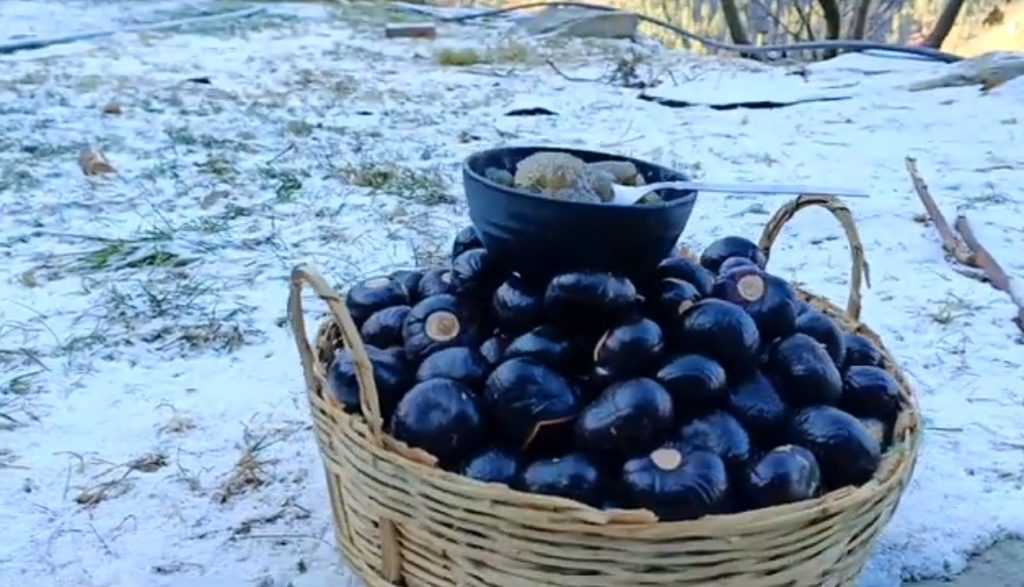
Walking past deodar trees, we arrived at the khanor forest. Khanor trees are tall, growing up to 25 to 30 meters (82 to 98 feet), while some older trees can be even taller. They provide cool shade, their canopy spreading as wide as 12 meters (39 feet). A strong wind was blowing, scattering the leaves to the ground and covering it like a giant blanket. In October, the khanor fruits begin to fall from the trees and in November, villagers set out to collect them.

My village, Sheel, is located in the Banjar region of the Kullu district of Himachal Pradesh. Snow-covered mountains surround it from all sides. Every year, these mountains receive at least 4 to 5 feet of snow, which stays from December to April, adding to the village’s beauty. My village is twenty-two kilometres from the nearest town, and the clean air and scenic views here are truly enchanting.
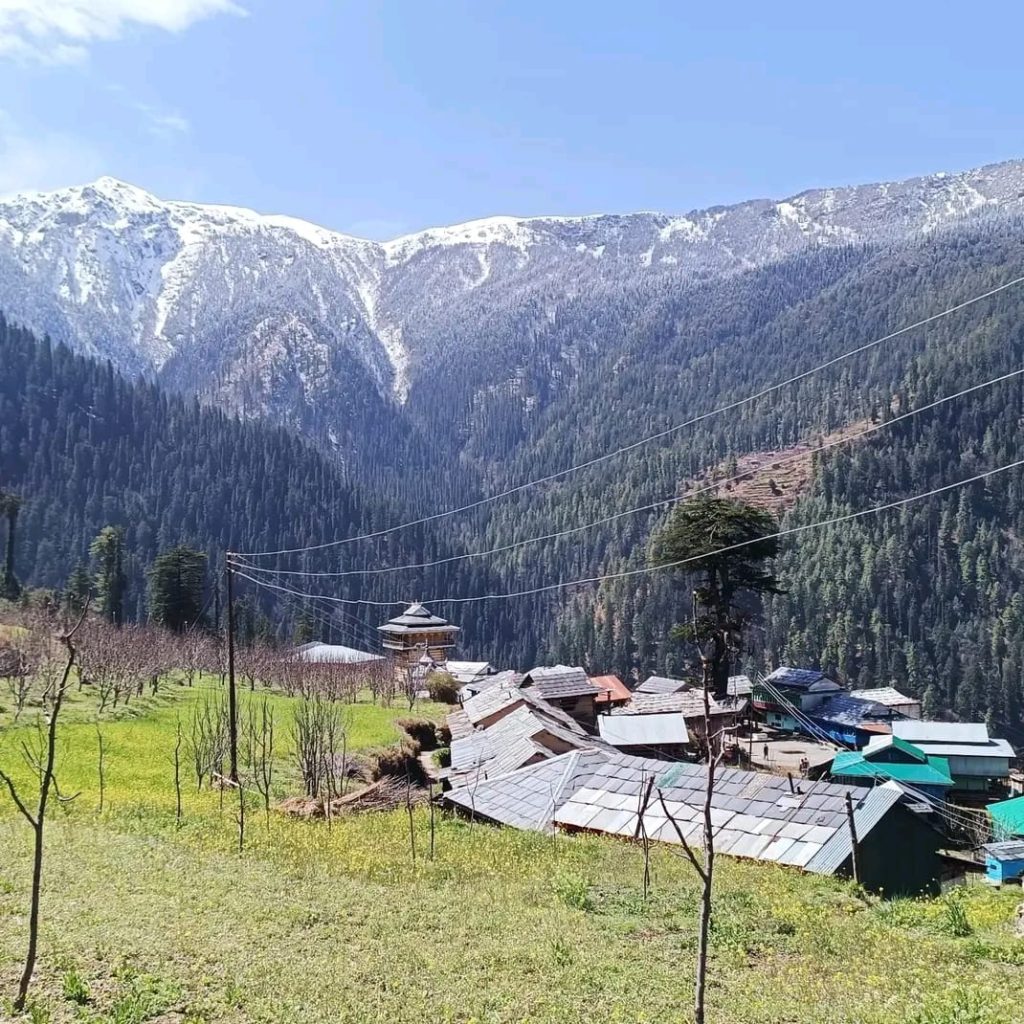
In my village, during the month of January or Magh or Makar Sankranti in the local Pahari language, we make seek from khanor. Seek is a type of white flour made from the inner white part of the khanor fruit. With this flour we make puri and babru. Babru is a traditional dish of Himachal Pradesh, and while it looks like a puri, it is slightly different in taste and texture. Made with wheat or barley flour, one can add jaggery, sesame, or even khanor to it to make it sweet or savoury as one might desire. What makes seek flour unique is that it can be mixed with any type of flour, be it wheat or barley, to which it adds a mildly sweet flavour. Most commonly, seek flour is used to make halwa, a type of sweet pudding, which is highly nutritious. Even today, many villagers rely on the forests to search for khanor in large quantities.
In Himachal, the khanor fruit tends to be very bitter, yet the people of the hills and high-altitude areas make seek flour from it. My nani always reminds me that the reason for this is deep-rooted in the history of these mountain communities. She says that, in the past, people in these remote, forest-dependent regions had no choice but to rely on the natural resources available to them. And so they learned to adapt to, and make use of, even the most unpalatable and bitter ingredients.
It’s truly fascinating how ancient traditions have been passed down through generations. Growing up in these mountains, I’ve seen how the bitter and tough fruit of khanor, which once seemed so strange, has become a part of our lives. Nani always reminds us that people in the past didn’t have access to markets like we do now. They had to rely on whatever the forests provided, and from that, they learned how to make even the most difficult and bitter things edible and delicious. I often wonder how our ancestors figured out the way to turn the bitter khanor into something both edible and tasty.
The khanor story is not just about food or customs, it’s about a way of life that is deeply connected to the land. Sometimes, when I walk through the forest or see my elders collecting khanor, I realize how profoundly the land has shaped us, and how much we depend on it. These mountains have given us everything, shelter, food, knowledge, and strength. And in return, we try to keep these traditions alive, not just for the food, but to remind ourselves of the bond we share with the land.
My mother had a mungar (hammer) made specifically for cracking the khanor fruit. Mungar is made from either cedar or chir pine wood and is larger in size compared to a regular hammer, making it easier to break open the fruit. The handle of the hammer is a long piece of wood, so it is easier to hold. As soon as morning came, nani and mother began breaking khanor with the mungar. The tak-tak-tak sound echoed throughout the house. Once all the khanor fruits were cracked open, they were left out to dry.
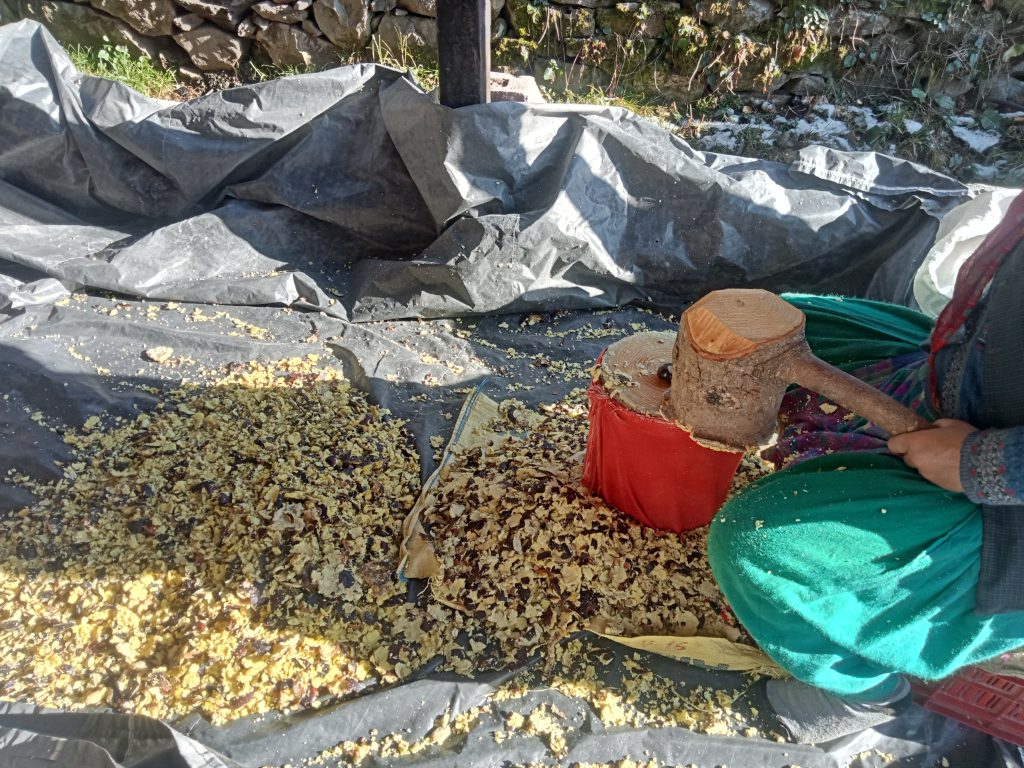
The white fleshy bit inside the khanor fruit is called jeem. This is what emerges after the fruit is ground. Initially, when the jeem is pounded and laid out to dry, it looks yellowish, but once it dries completely, it turns pure white. It tastes extremely bitter and takes a lot of time and effort to be made suitable for eating. After extracting the jeem,it is packed in a large sack and placed in a flowing river so that its bitterness is slowly washed away by the water. There’s a stream close to my house where we went to put our sack. It remained submerged in water for several days. Once we estimated that the bitterness had reduced, we took the jeem out and spread it in the sun to dry in the front courtyard of our house.

Photo: Shalini Kaith
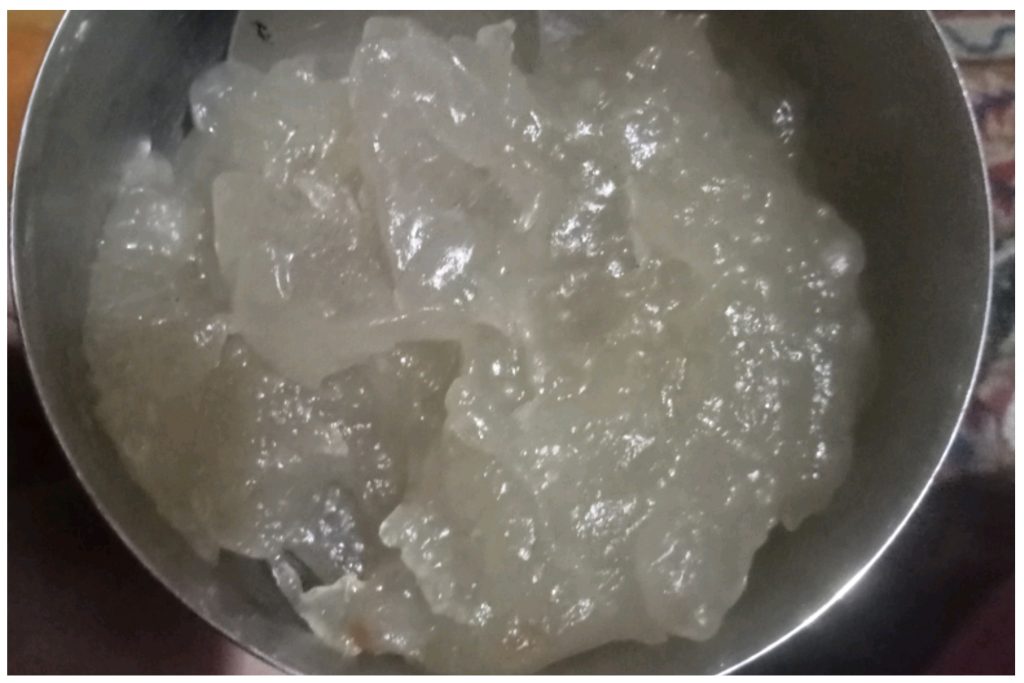
Once the jeem is completely dry, it is put in a large vessel filled with water. There, it is slowly crushed or ground until all its colour and flavour are released in the water. When all its juice and pulp have fully dissolved, it is strained and the water is poured into another vessel and left covered for a day. The next day, a white layer settles at the bottom of the vessel. This white sediment is seek—the nutritious extract from khanor. The seek is carefully separated from the water and laid out to dry. It takes about a week to dry fully. Once dried, it looks like flour, though it still has a very bitter taste. I asked nani how this bitterness is removed. Smiling, she explained that the seek is rinsed and drained repeatedly with clean water until its taste becomes milder—just like in the old days, when even the toughest things were made easier with patience and care.
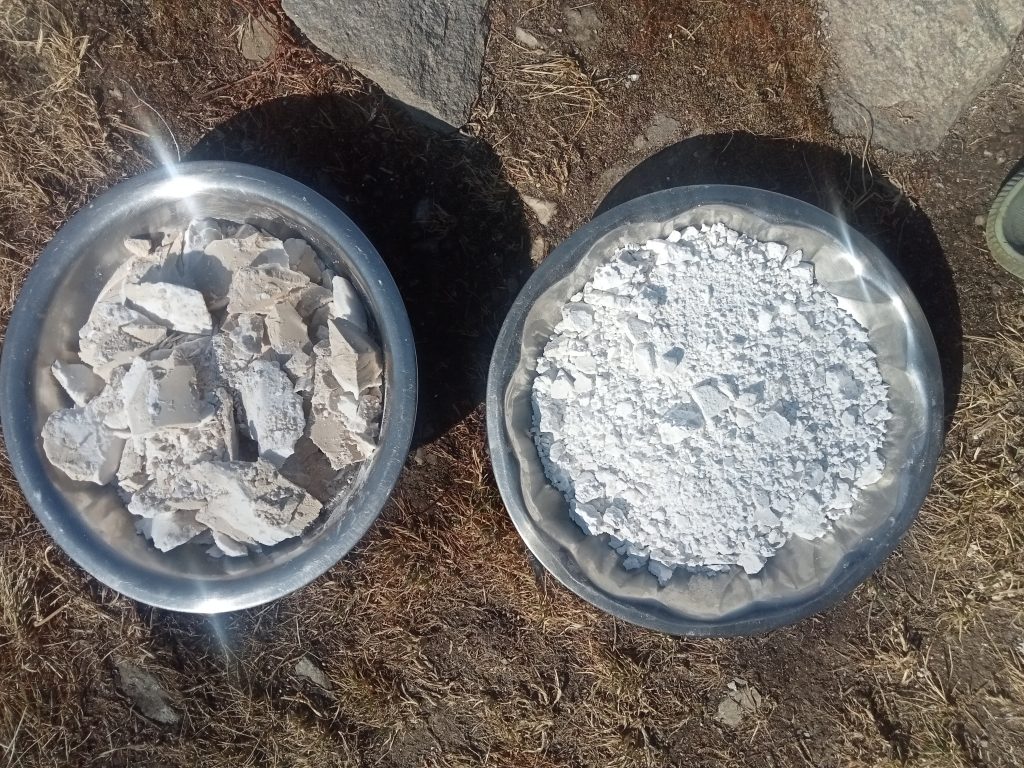
Nani says that seek help in fighting several illnesses. It is considered especially beneficial for women and girls during menstruation. In addition, it is also believed to help prevent serious diseases like cancer.
The hard and inedible outer part of the khanor fruit is called falodi. It is commonly used as fodder for animals. In the village, most people feed it to their cows, bulls, and goats. They believe that falodi is nutritious and helps keep the animals healthy and free from disease. In our village, around 30 to 32 households keep cows, bulls, and sheep, and they regularly feed falodi to their livestock.
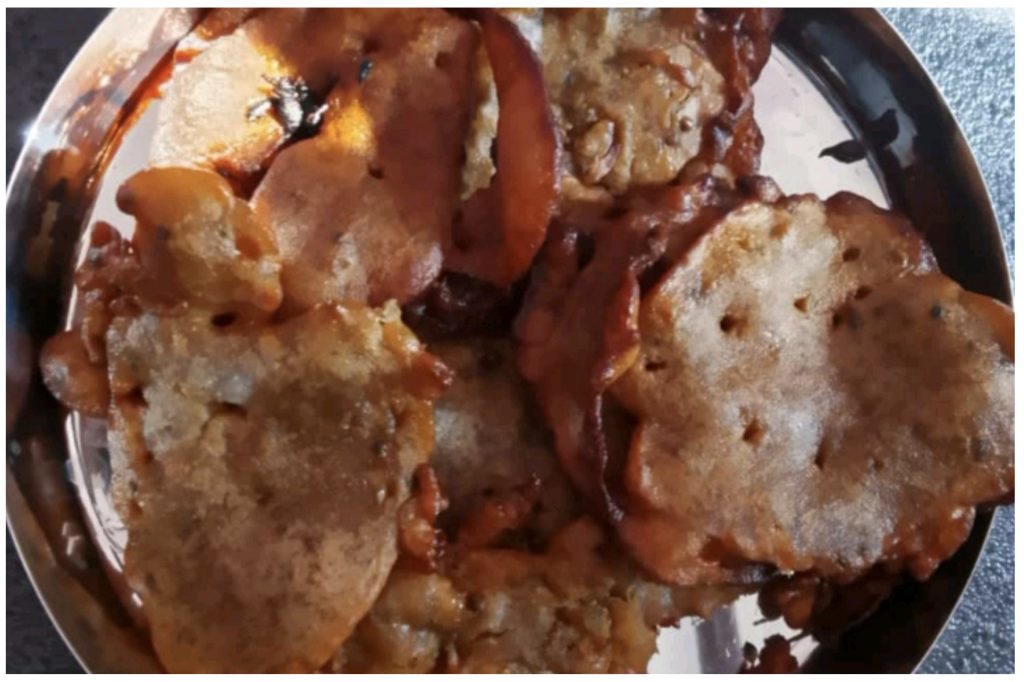
On the occasion of Magh (Makar Sankranti), traditional dishes like chullu are prepared from seek. Nani knows how to make chullu very well and has taught my mother too. It had been a long time since chullu was made in our home and this time it turned out absolutely delicious. Chullu is fried in hot oil, much like puri, but nani makes it slightly smaller than puri. Once they were fried, they looked beautiful and tasted amazing too. Making chullu and babru is a tradition in every household, without them Magh feels incomplete. These dishes are not only tasty but also highly nutritious. Nani carefully stores the leftover seek flour in a large container, which keeps it from spoiling for many months. Even after a long time, its taste remains just as fresh.
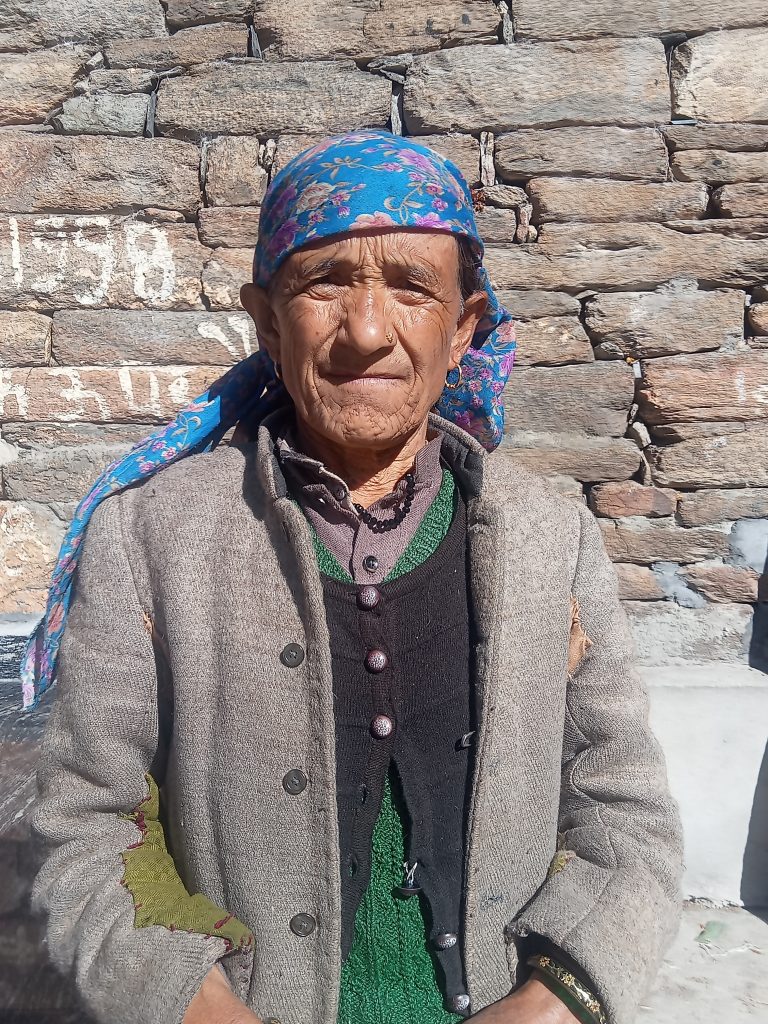
My mother, Kaushalya Devi, learned how to make seek from my grandmother. In our community, recipes are often passed down generations through women. The kitchen is considered an important space, and traditionally a woman’s responsibility. But little thought is given as to why this onus has always been limited to women.
I believe it is important to recognize that cooking and preserving food traditions is an art that everyone, regardless of gender, should learn. The idea that these traditions should remain limited to women is a cultural construct that needs to change. After all, why is the responsibility of learning traditional recipes placed only on young women and not on men?
Nani often says that age-old food traditions are slowly dying out. Is it because people today are no longer willing to put in the hard work? Even now, nani continues to do every task with great energy and dedication. When I ask her, ‘How do you manage to do so much work?’ She just smiles and remains silent. But in that silence, there is a quiet resolve, to keep the tradition alive.
In our village, most people collect khanor only to sell it, with only a few still willing to put in the effort to make seek and jeem using traditional methods. My grandmother is one of those few who continues the practice of extracting seek from khanor. With the same enthusiasm and effort, she still creates delicious dishes from seek. The price of seek is gradually increasing, 200 grams now costs ₹400. As this tradition fades, both its price and demand will continue to rise.
When I asked other women in the village how they learned to make seek, most of them gave the same answer: ‘We learned it from our elders.’ Today, however, the younger generation seems to be drifting away from these traditions, perhaps because they are less willing to put in the hard work, or perhaps because everything is now easily available in the market. After all, why go through such a laborious process when one can simply buy it? Still, my grandmother and mother constantly encourage us, saying, ‘Learn it, so that this tradition never dies.’ They want future generations to understand just how deep and valuable our food heritage truly is.
Still, one question always lingers in my mind, ‘Will this tradition continue to live on through generations, or will it eventually fade away?’ Thinking about it makes my heart a little heavy…. Perhaps this is our greatest worry.
I often catch myself in a dilemma, yes, these food traditions must be preserved, for they root us to our land and remind us of who we are. But at the same time, I wonder if in celebrating them, we are really just glorifying the burden of preservation, one that, unsurprisingly, always seems to land neatly on a woman’s shoulder.
Meet the storyteller

Shalini Kaith
Shalini Kaith is from a small village called Sheel in the Kullu district of Himachal Pradesh. She has cherished the beauty of nature from a young age. Shalini has completed her BA in History. She is deeply passionate about music, trekking, and travelling. She aspires to preserve the ancient traditions and customs of her mountains, as they are the identity and pride of her village.
शालिनी कैथ हिमाचल प्रदेश के कुल्लू जिले के एक छोटे से गांव शील की निवासी हैं। वह बचपन से ही प्रकृति के सौंदर्य की प्रेमी रही हैं। शालिनी ने इतिहास में विशेषज्ञता के साथ बी.ए. पूरा किया है। उसे संगीत के साथ-साथ ट्रैकिंग और यात्रा करने का भी गहरा शौक है। शालिनी पहाड़ों में प्राचीन परंपराओं और रीति-रिवाजों को जीवित रखने की आकांक्षा रखती है, क्योंकि ये उसके गांव की पहचान और गौरव हैं।

Voices of Rural India
Voices of Rural India is a not-for-profit digital initiative that took birth during the pandemic lockdown of 2020 to host curated stories by rural storytellers, in their own voices. With nearly 80 stories from 11 states of India, this platform facilitates storytellers to leverage digital technology and relate their stories through the written word, photo and video stories.
ग्रामीण भारत की आवाज़ें एक नॉट-फ़ॉर-प्रॉफ़िट डिजिटल प्लैटफ़ॉर्म है जो 2020 के महामारी लॉकडाउन के दौरान शुरू हुई थी, जिसका उद्देश्य ग्रामीण कहानीकारों द्वारा उनकी अपनी आवाज़ में कहानियों को प्रस्तुत करना है। भारत के 11 राज्यों की लगभग 80 कहानियों के साथ, यह मंच कहानीकारों को डिजिटल तकनीक का प्रयोग कर और लिखित शब्द, फ़ोटो और वीडियो कहानियों के माध्यम से अपनी कहानियाँ बताने में सक्रीय रूप से सहयोग देता है।



Wwow nice 👍