Memories Buried in the Soil
In the village of Kultham, in Uttarakhand, a single night of heavy rain and a landslide slowly undid a life that had stood for decades, a life of families who had tilled their own soil and raised their children on it. Homes, fields, and the quiet, ordinary joys of daily living: all of it was gone by morning. The people were forced to leave their village and build a new life elsewhere, but their hearts and their memories never really left. They remain behind, caught among those mountains, those broken fields, that old and familiar ground. This is not only the story of a disaster. It is also the story of the pain of leaving home, of losing one’s sense of self, and of having to begin again, a pain that runs deeper than the soil, and outlasts even memory.

Storyteller- Ishant Mehra,
Himal Prakriti Storyteller
Kultham Sarmoli, Munsiari,
District Pithoragarh, Uttarakhand
Read this story in Hindi
When the Mountain Spoke
That night, the rain kept falling for a little too long. Dhar… dhar… the drops falling on the tin roof were not like they were on ordinary days….they were heavy, and much scarier than usual. I kept turning over in bed, again and again. As the sound of the rain grew louder, the restlessness inside me grew too, and falling back asleep became difficult. I went to sleep beside my mother. Mother said softly, “Don’t be afraid… in the mountains, heavy rain makes a sound just like this.”
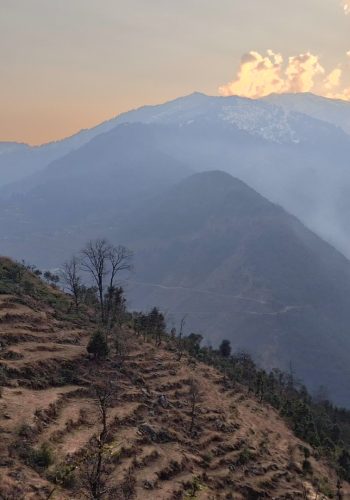
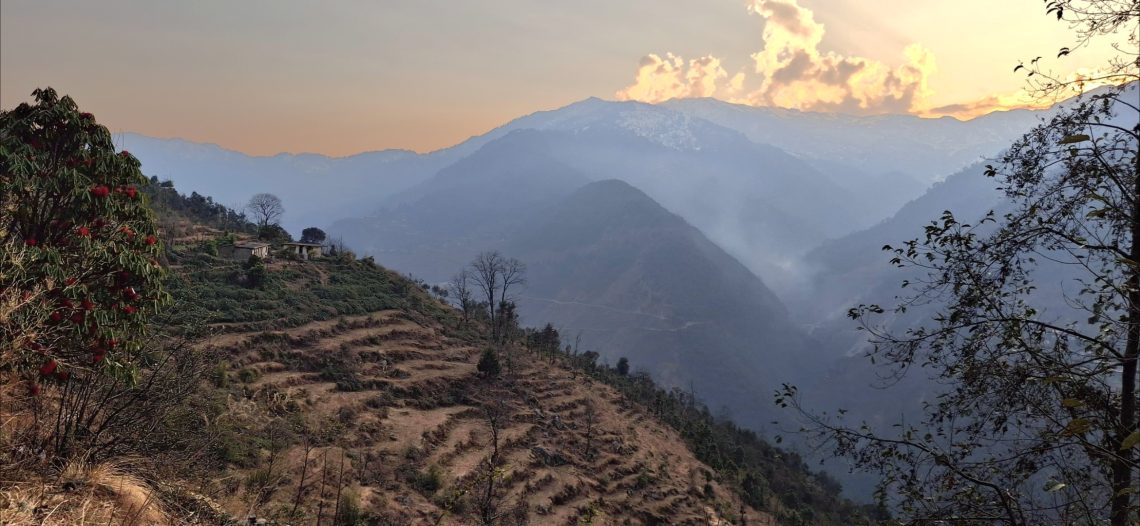
About 18 kilometres from Munsiari, at a height of 1800 metres above sea level, on the hill slope of Naagni Dhura, to the north-west of the Panchachuli range, sits my village — Kultham.
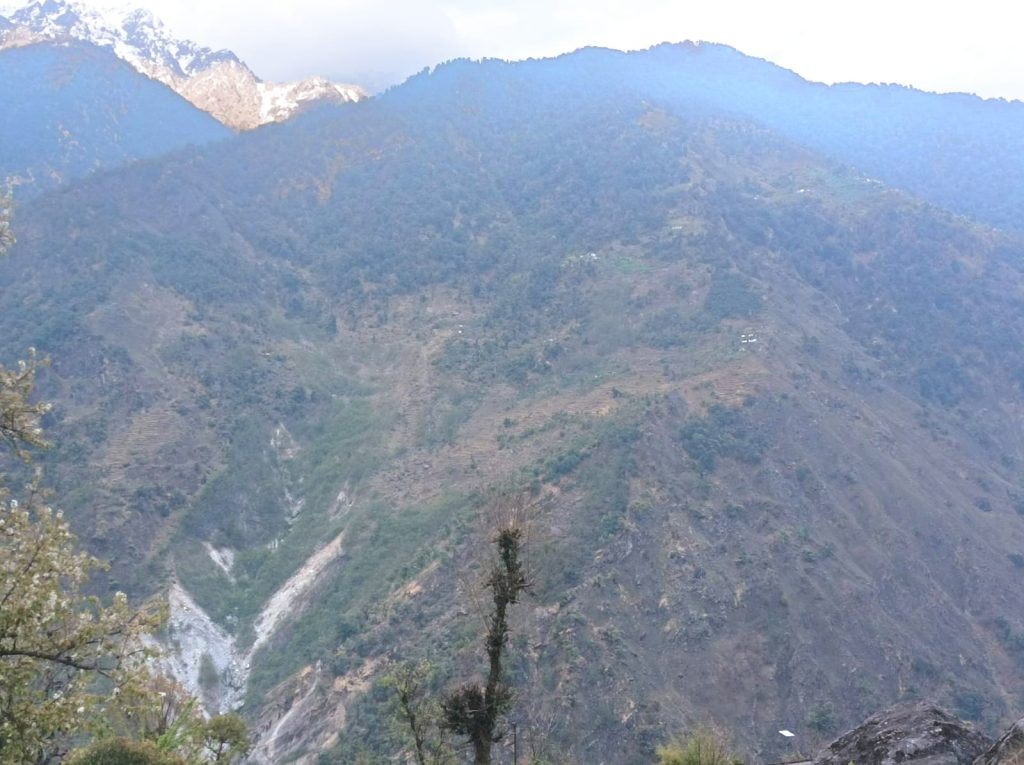
2 August 2013… I remember this date even today. It is still etched into my soul, even now. On the morning of this day, when my eyes opened in Kultham, the sounds of our neighbourhood were coming into my room. Mother was calling out a “dhaat” (calling out to someone far away) to her dagariyo (friends), to go to the forest to cut grass; nearby, the laughter of children at play was echoing in the air; and the loud “hoyal” (the special call herders use to call their animals) was coming from our courtyard, through the path to the forest.
All these sounds were telling me to leave my bed and step outside. In that room filled with smoke, Grandmother was making rotis on the chulha. Because of the rain, the firewood had gotten wet, and so Grandmother was blowing into the chulha again and again, trying to keep the fire alive. Grandmother said to me, “Come, you blow into it… let’s see what a hard-working woman your mother-in-law will turn out to be? There’s a saying where we’re from — whoever’s blowing makes the fire catch quickly, that person’s mother-in-law will be just as sharp and hard-working.”
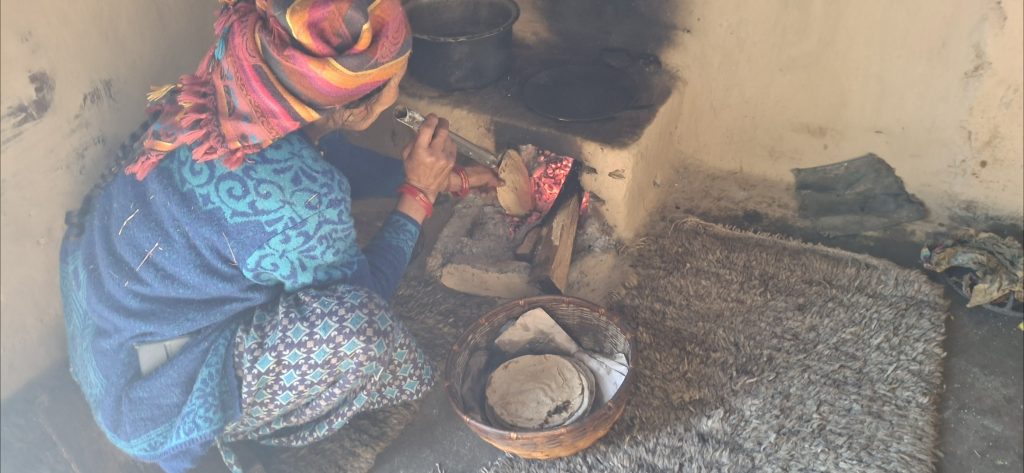
Grandmother and I began talking about the rain that had fallen the night before. Suddenly, cutting through all these sounds — dhamm… dhamm… — a sound came from the hill above, from the middle of the village. At that moment, it felt as though, in some ancient time, someone was beating a great drum to announce something. The two of us ran outside. “A huge boulder has broken loose from up above and is coming toward the village!” yelled Grandfather, standing outside, his voice trembling.
Later, I learned that the boulder weighed nearly 1500 quintals (1,50,000 kilograms). I was left utterly stunned.
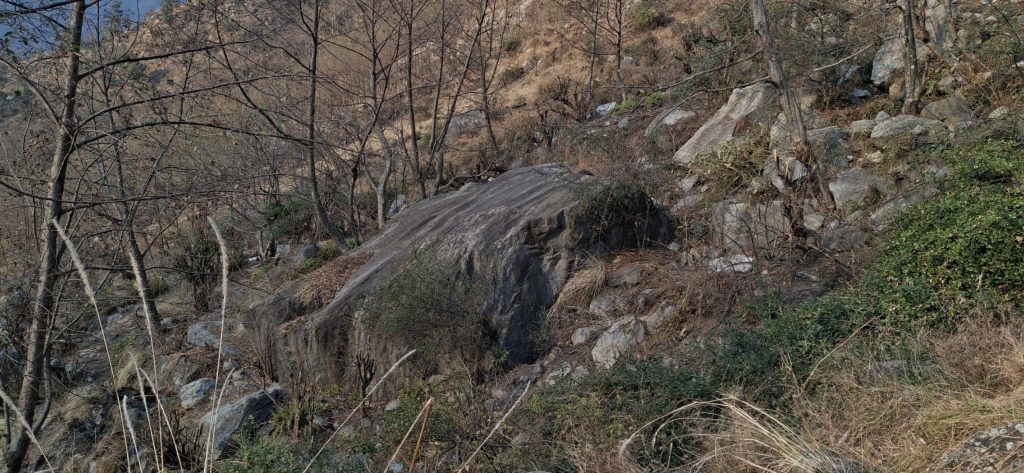
Everyone was watching it, and the damage it had caused, as though it were nothing more than a spectacle. Every tree and plant that came in its path stood broken at its mere touch. The boulder roared down through the terraced fields in the middle of the village, and finally came to rest in a large, flat field. No human life was lost, but our crops had died.
Nearly 40 nali (2 acres, or 3.20 bigha) of the entire kidney-bean and potato crop had been destroyed. Grandfather stood there, staring at the fields, and I stood, staring at Grandfather. In my eleven-year-old mind, this was only broken soil. That grief, at the time, was beyond my understanding. Grandfather looked at the boulder, sunk deep in thought. He said, “This mountain has surely broken for the first time today, but not the last… now it will break every year.” The village, its people, life itself… everything had been thrown into disarray in a single instant. People’s work came to a halt, the village’s one and only school was shut too, and everyone stood outside their homes, trying to make sense of the shock of losing their land.
Over the next few days, the village was slowly returning to its normal life, and together, people were bearing the shock of the sudden blow……..when something that no one had expected at all, suddenly happened.
When One Night Changed Everything
People kept telling themselves, “Well, at least our lives were spared… even if the kidney-bean and potato crop was ruined, the rice and mandua are still standing.” It was the month of Bhado1 (Bhadrapada). On the evening of 19 August, everyone was busy with their own work. As the sun began to set, the weather too began to change. The stars hid themselves behind black clouds. Raindrops fell and mingled with the water pooled on taro (arbi) leaves, gathering into pearl-like drops before dropping to the ground below. As the rain grew heavier, power went out in the village. Slowly, from every house, the light of solar lamps, candles, and kerosene lanterns began to glow.
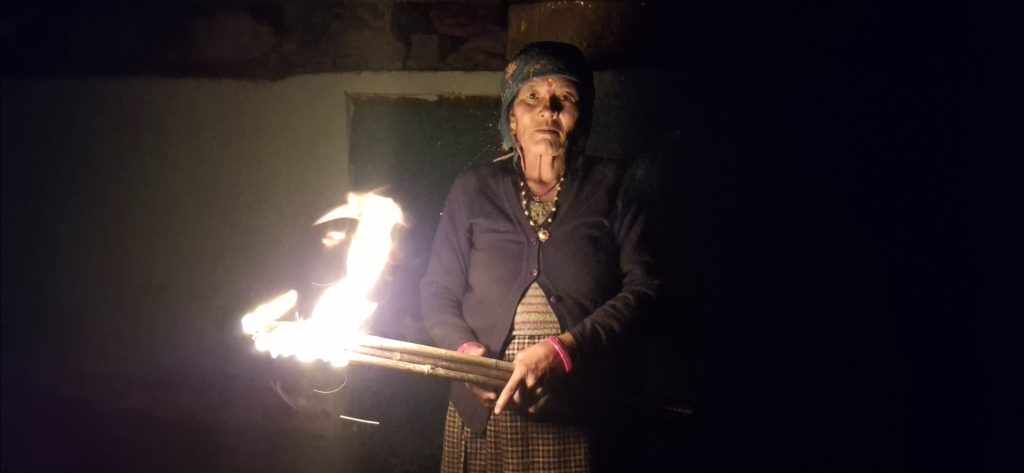
After everyone had eaten and gone to sleep, both the night and the rain grew deeper. At around two o’clock, the ground began to shake, and loud sounds of things falling and breaking echoed across the village. I thought I must be dreaming. Suddenly, my mother’s voice came screaming into my ears — “Ija pair aainge, chyat bhair bhaaja… bhaaja.” (Oh, Mother, a landslide is coming, run outside, run quickly.) As soon as I got up and started running outside, I heard the same sounds coming from the houses around us. In the fog and the heavy rain, nothing could be seen. All around, only the sound of dhaat echoed; and at that time, there was neither a torch nor a solar lantern to give us light. My father and grandfather quickly fashioned a torch and lit it, so we would have some light to see by.
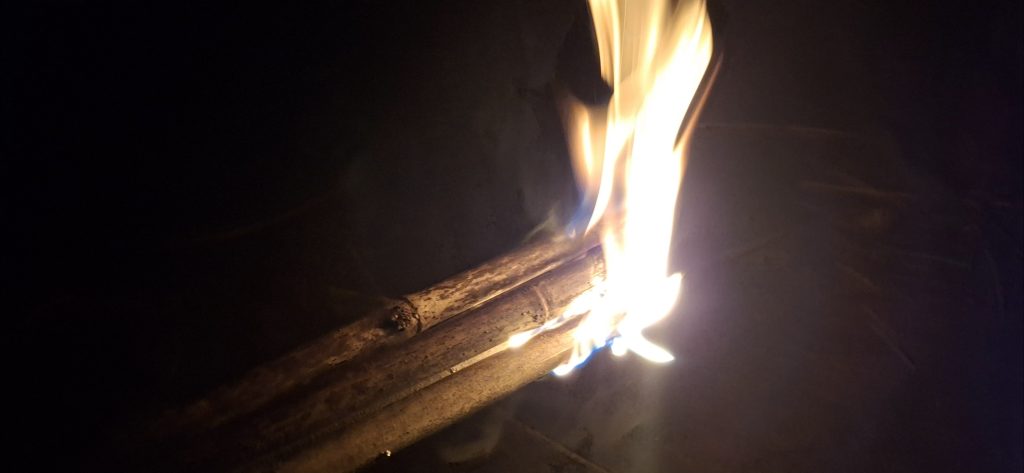
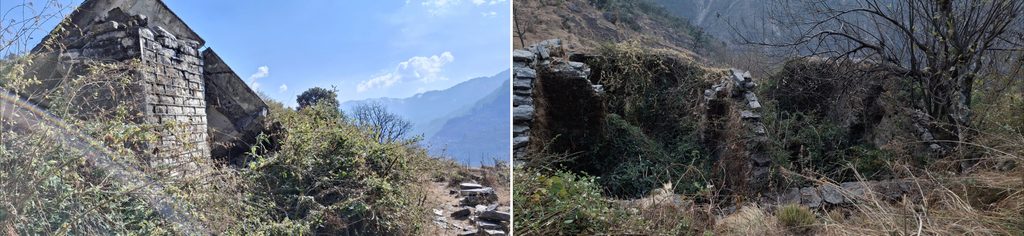
By the light of this torch, we made our way alongside the animals, through mud and grass, stumbling and falling, soaked through by the rain, all the way to the school. It was there that we spent the night. It was a safe place. Other people from the village came and gathered there too, with their animals. The next day, when we looked around, we saw that almost all the houses of the 13 families had been twisted out of shape by the debris. Water was flowing out from inside the houses, as though some stream had cut straight through them and kept on flowing. Because there had been no light in the darkness, and because of the fear for their lives, no one had thought to save their belongings. Only a few of the women had managed to grab hold of their jewellery. After some thought and discussion, the villagers put up tarpaulins for everyone at a safe spot on the ridge below the school.
The whole face of the village had changed completely. “Where will we live now? What will we do?” said a woman who lived nearby, giving voice to what everyone was thinking. We all went toward the fields, holding on to the hope that perhaps something, somehow, had survived. It turned out that where, the year before, there had been heaps of mandua ears, now only half a basket remained. Mother sat down right there. Weeping, she said — “What will we eat now…?” For some time, she sat there and cried her heart out. Then she stood up quietly, straightened her salwar, and shook her head, as though holding herself together, and said, “Let’s take this little bit of mandua and go on to our shelter.”
Did Development Shake the Mountain’s Foundation
While, on one side, everything seemed to be breaking apart and slipping away, on the other side, I witnessed some hope stirring within my father and uncle. The hope that if a signal came through, they might be able to hear the cricket commentary. The two of them had taken a small black radio outside the tarpaulin and were turning its antenna this way and that, hoping it would come to life. People from the nearby village gathered around to wait with them. After the fifth attempt, the radio caught the signal, and a voice came through: “And now our batsmen have walked out onto the field.” Everyone shouted with joy and sat down in a circle around the radio, as though, for these few moments, they had forgotten everything that had happened only a little while before. That is the magic of cricket!
While all this was going on, Grandfather was nowhere to be seen. Grandmother told us that, being the Sarpanch, head of the Van Panchayat (forest council), he had gone to another village, Dhilam, just two kilometres away, to get in touch with the government and ask for help. After eating dinner that night, all of us sat down to warm ourselves by the fire. Outside, a cold wind was blowing — sarrr… sarrr… — and inside the tarpaulin, it felt even colder than it did at home. It took great effort to pull ourselves away from the warmth of the fire. Just then, Grandfather too arrived, and sat down with us to warm himself by the fire. After listening to him talk for a while, I asked him, “Why did the landslide come to our village…?”
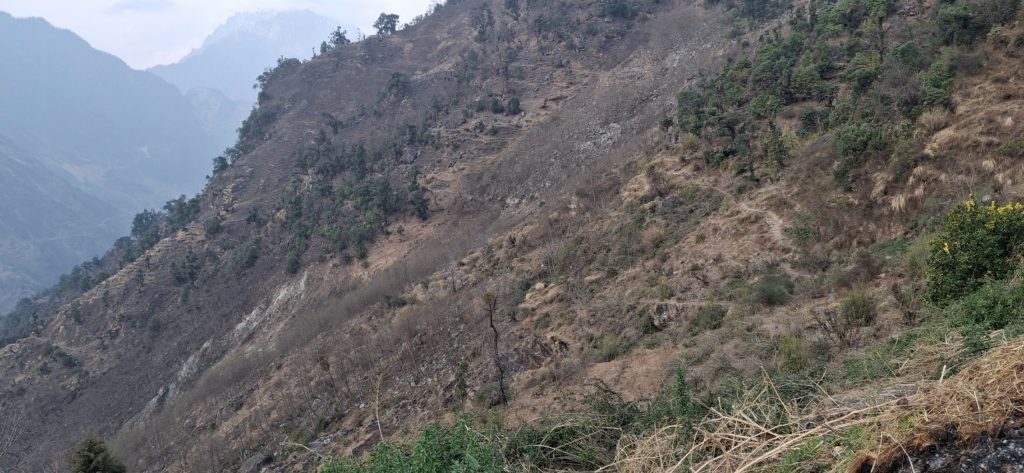
Grandfather told me, “Around 1975–76, the Uttarakhand government built a hydroelectric project below Kultham village, at Suring Gadh, which lies on the slope of our village, on Gori2 river that flows through there. During its construction, many large boulders had to be broken by blasting into the mountain.” At this, Grandmother interjected saying, “Whenever the blasting happened, sometimes even the pots and pans in the house would rattle and clang.”
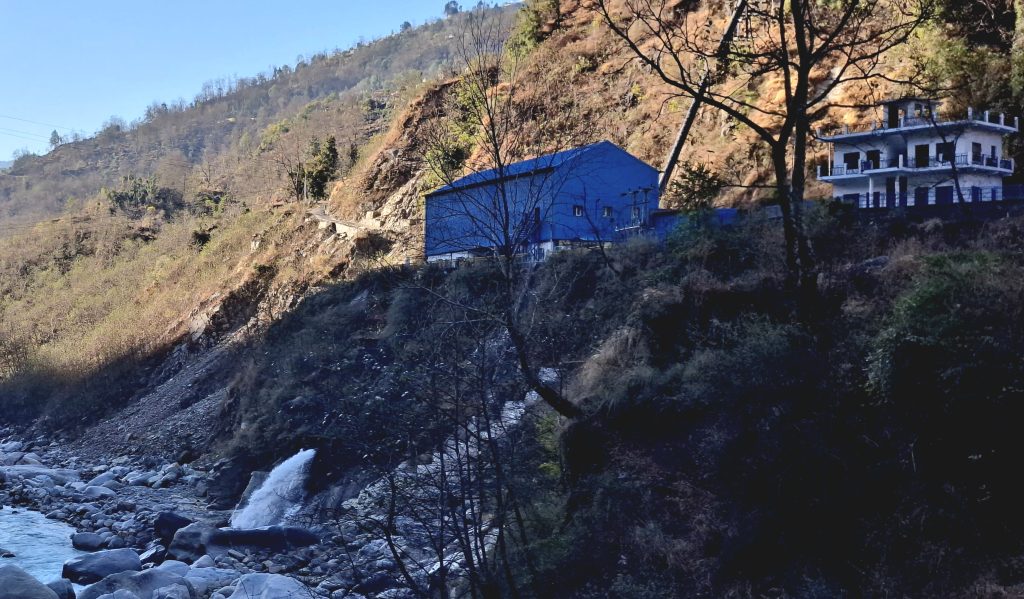
From this, it seems that at the time of blasting, the very foundation of Kultham’s slope had been shaken, and its firm hold was growing weaker. Grandfather told me that when the power house was being built, all the people of the village used to go down for work. About two years after it was completed, in the early monsoon of the third year, a landslide began in the lower part of the village. Many houses in Talla Kultham broke apart, and people lost their land too. At that time, the whole village came together to support one another, and those whose homes had been destroyed were resettled in a safe place, in another part of the village itself, on Van Panchayat land.
Suddenly, Grandfather fell silent. His eyes seemed to settle somewhere far away, and he grew grave, lost in thought. Perhaps he was thinking that what had happened, so many years ago, in Talla Kultham, had now happened again, today, in Malla Kultham. I asked, “Where will we live now…?” Grandfather stayed silent, because, at that moment, even he had no answer to this question.
However, it would not be entirely right to assume that the landslide was caused only by the construction of the power house. There may be natural causes behind it too such as orogeny, a geological process in which the tectonic plates, or the rocks that lie within the earth, keep moving continuously, at a very slow pace. When two tectonic plates collide with one another, events like earthquakes occur. These collisions build up pressure, and rocks begin to rise upward, and this is how mountains come to be formed. When this pressure increases, the sensitivity of the region increases too, and in such conditions, even a slight tremor can become the cause of a landslide, or of cracks forming. And yet, at that time, no one in the village had felt any earthquake; still, the people of the village, and others living nearby, went on believing that this landslide had happened largely because of the hydroelectric project built at Suring Gadh and some believed it was God’s undoing.
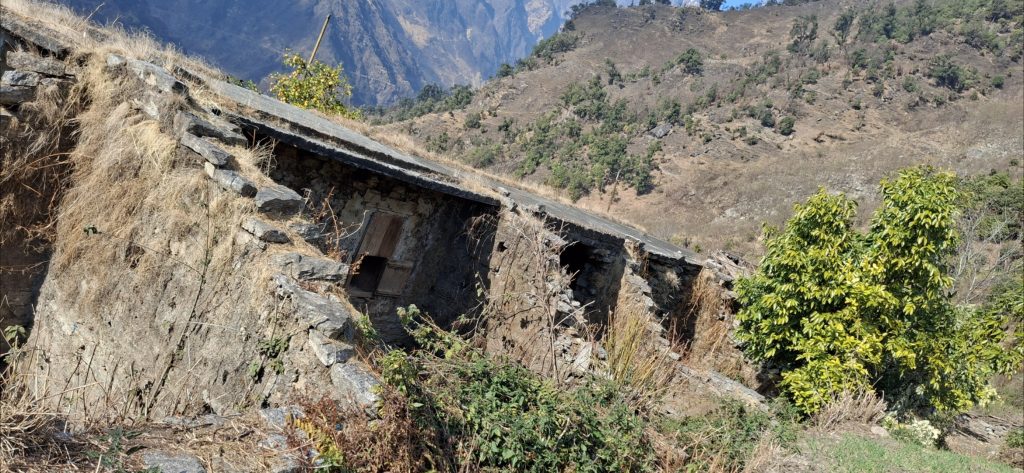
Perhaps this was not the result of any single cause, but rather a chain of many causes. It may be that when the power house was built, the blasting weakened the ground’s foundation to some degree, and the stability of the slope was affected. After that, the excessive rainfall of 2013 may have placed further pressure upon ground that was already loosened. Along with this, it is also possible that geological processes like orogeny were exerting their own influence somewhere amidst all of this, too. It is hard to say anything with certainty, but perhaps it was these several causes, together, that gave rise to the landslide that changed both the land and the life of the village.
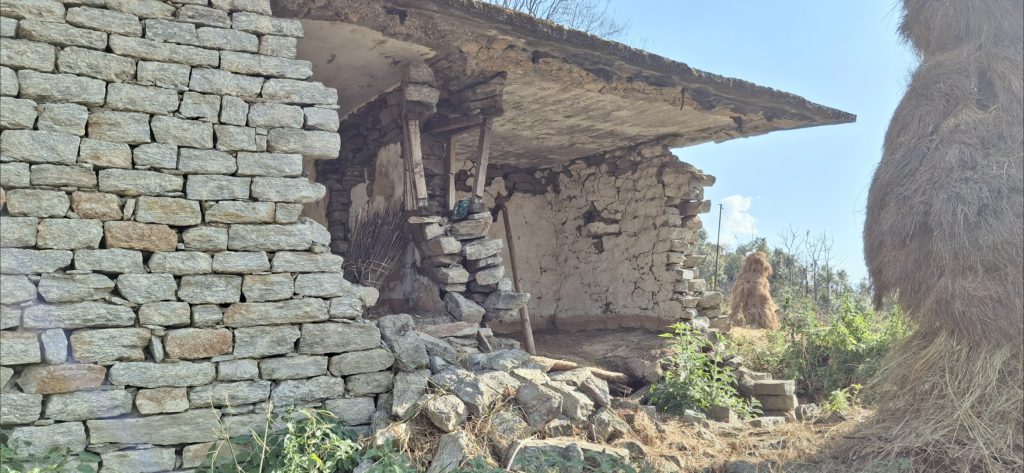
By the Light of a Ringal Torch
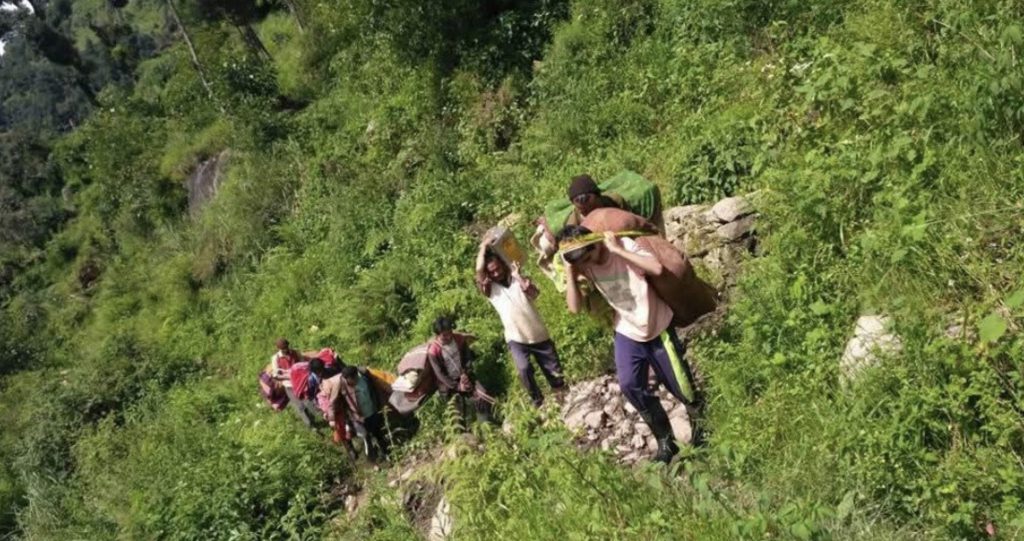
The day we carried our belongings from the tarpaulin toward the school, a deep darkness lay all around us. For light, we lit a torch of dry ringal (dwarf bamboo). The path was broken and full of mud. Just then, my sister Priya’s foot suddenly slipped, and she vanished from our sight. For one moment, it seemed as though she had fallen off the path into the gorge below, and my heart seemed to have stopped. But when we hurried forward to look, we found that she had fallen into a pit, about 8–9 feet deep, right in the middle of the path. Papa reached out at once and pulled her out. Then, as soon as we were certain that all was well, the mood grew lighter, and we all began to laugh, as though the whole weight of the past few days had lifted, if only for a moment.
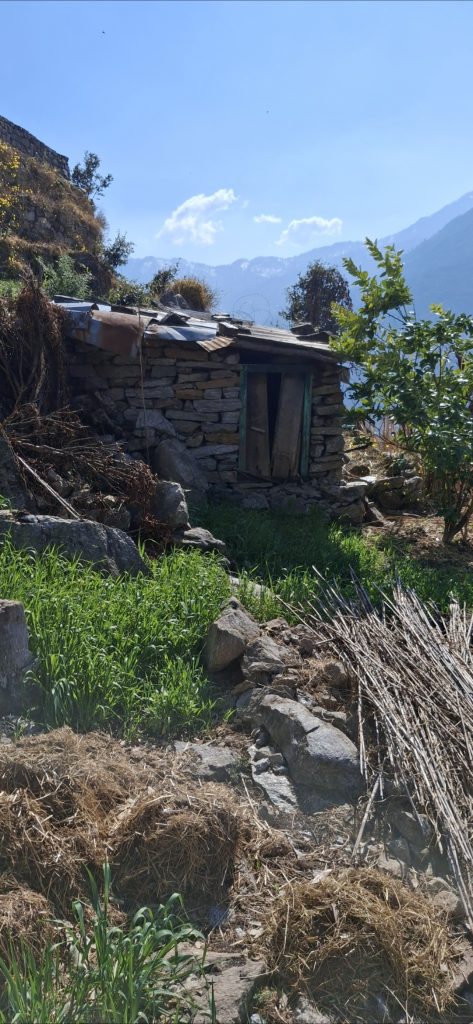
Photo: Ishant Mehra
While we stayed at the school, we built a cowshed on the empty, barren land around it and began keeping cows there. We made ghee from their milk and sold it, and this sustained the household’s livelihood. Alongside this, to save up some money, men and women of the village began going to other villages to labour, breaking stones, and they also gathered things like keeda-jadi (caterpillar fungus – a rare high altitude Himalayan fungus) to earn a little more money, so that, further down the road, they might build a home of their own, or buy some land somewhere.
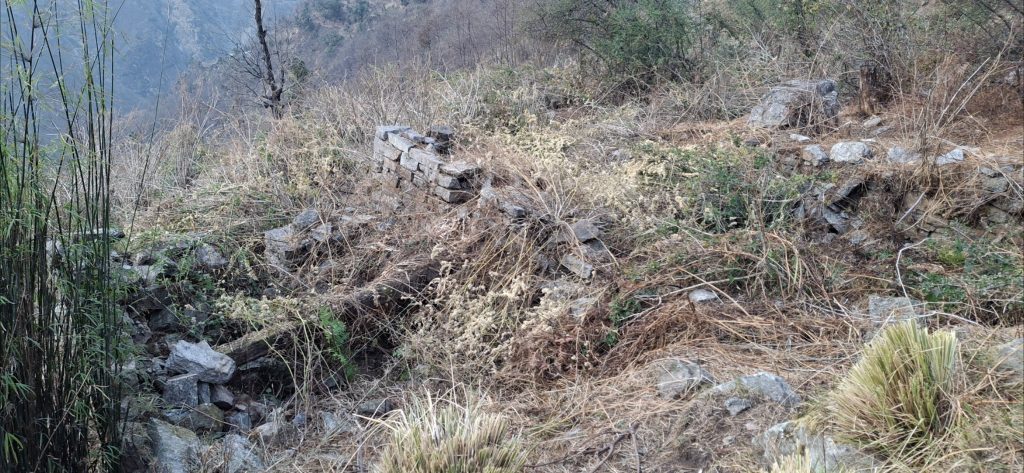
Nayabasti: Looking at Home from Across the River
All the people of our village came together to raise a demand for compensation from the government. As part of this effort, they even had to go on an eleven-day hunger strike at the Munsiari tehsil office, in which all 13 families took part, taking turns. This sustained effort built up enough pressure that, eventually, the Uttarakhand government decided to give us land in Nayabasti, a village located about 5 kilometres from the main market of Munsiari. Once we received the land, we set out from Kultham to settle there. Along the way, we faced many difficulties because of landslides, but somehow, we finally reached Nayabasti.
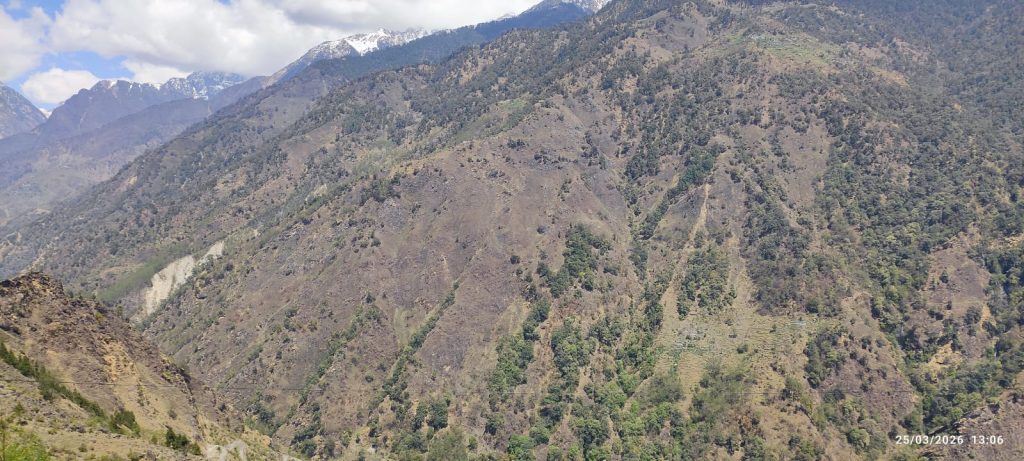
From Nayabasti, I could see my village across the river. And slowly, a truth began to settle within me. I had come very far from the place I had always called home. And now I was standing on unfamiliar ground. Could any other place ever become home? I simply kept looking at my village, at those small, broken houses… as though I were asking their forgiveness for having left them so far behind.
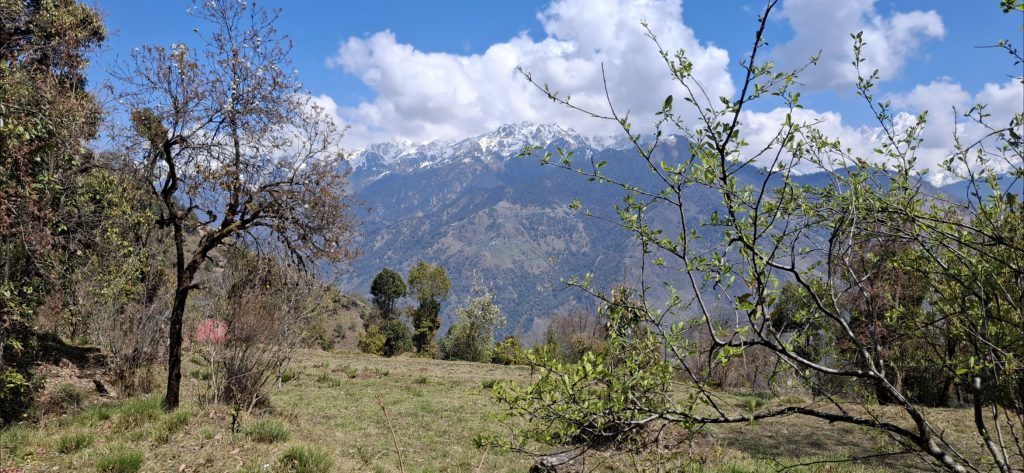
As soon as we began building our house in Nayabasti, its frame slowly began to rise. The beams and columns of the houses were ready, and preparations for further construction were also underway. It was around this time that, one day, a postman arrived there, holding a white paper in his hands. Later, we learned that this paper was a notice to vacate the land, because a part of that land, it turned out, belonged to a man named Rawat, a resident of Bunga village, in the Munsiyari market area. He had put forward a claim that the place was his, and this turned the matter into a dispute. Despite many attempts, the villagers could not secure the land, and so the 13 families were forced to leave that place. Everyone was left in despair, because the land had been secured only after so much struggle. And now, all their money too had run out; people had neither a place, nor a home. Once again, we found ourselves standing at that same crossroads — but now, if we were to go, where would we even go?
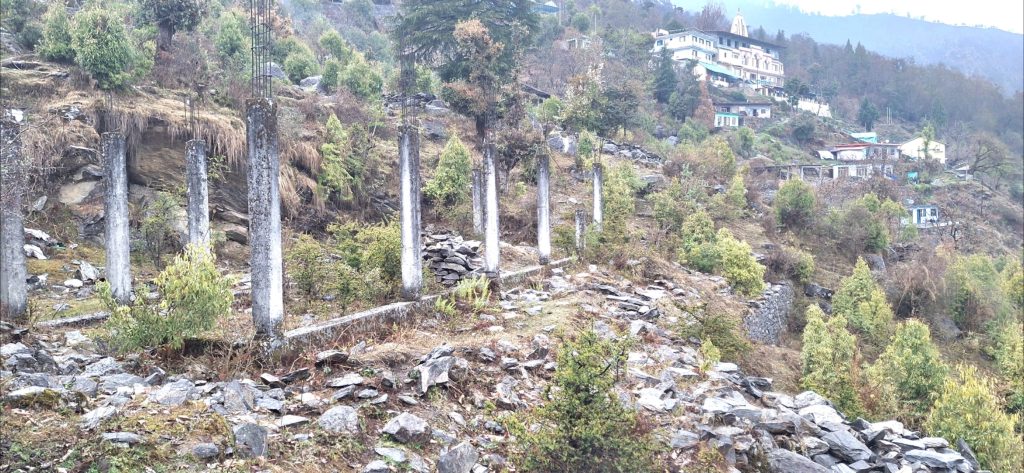
Slowly, people began looking for land again; every family had to buy land separately, since it had become impossible for the whole village to receive land together. The village split into four parts, as though into four directions. The 13 families of our village went and settled in four different villages namely Sarmoli, Ghorpatta, Malla Ghorpatta, and Chandani/Garampani. Just like that, families who had lived together, generation after generation, were now parted from one another.
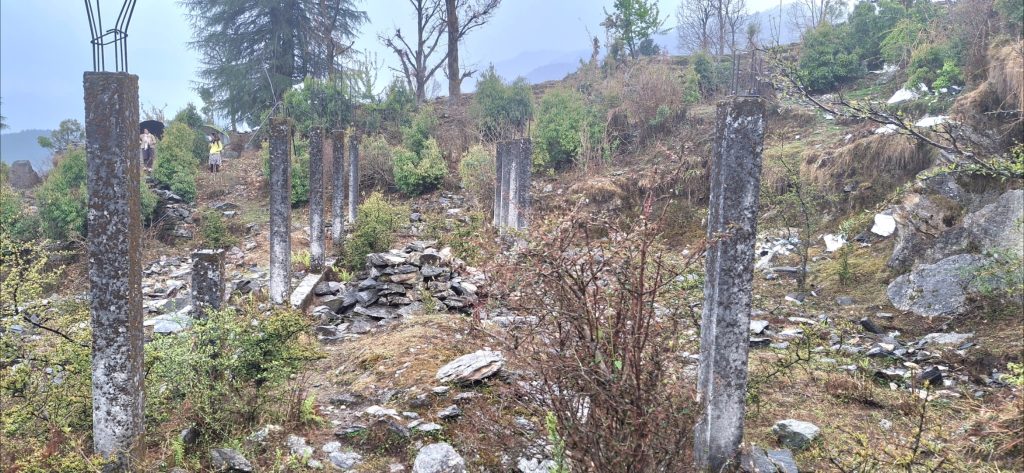
Did people really want to leave the village?
Eight years had passed. The year was now 2021. I had turned 19. In Kultham, only 7 families still remained. These were the ones whose homes had not been completely destroyed at the time. 7 other fragmented families had, even now, made the school and a one-room tin shed their home. These people had no land of their own left, and the entire village had turned barren. No fertile land remained for farming. So people met their daily needs by buying rations from the market. Some say they feel a deep attachment to the village, and that they do not like the city. This is why they still remain there. But they also say that only if the village becomes completely unliveable will they, too, one day, leave this place.
We were all returning to the village for a wedding. Inside, I felt a strange kind of happiness, but underneath it, a quiet fear too. All around us, the wedding filled the air with joy. Grandmother was talking with an old friend of hers, someone she hadn’t seen in years, and the friend didn’t recognise me at first. Grandmother smiled and said, “This is my eldest grandson.” Her friend laughed. “We’ve only grown older,” she said, “and you’ve only grown younger. I couldn’t place him at all.” The two of them fell into old stories, and slowly, everyone nearby found themselves drawn in, listening, until the whole gathering had sunk into memory.
Before the landslide, the village had nearly every comfort, except for a road and a hospital. Many people knew about herbs and medicinal plants, and they treated small, everyday illnesses right there at home. Some young folks had even dreamed of one day opening a medical shop of their own. In the village, people never needed to buy grain; their own fields gave them all they needed. Mother used to tell us that if someone had more of one grain than they needed, they would simply exchange it for another.
Farming and raising livestock gave them everything at home: grain, milk, curd, ghee. The flowers that bloomed in the fields gave them honey, and organic manure kept the crops pure. Perhaps this was why people in the village fell ill so rarely.
Today, the city has hospitals, but it also has more sickness. Income is low, and expenses are high. There is no land either, and when work cannot be found, those who labour for daily wages sometimes find themselves going hungry.
In the village, this never happened. Back then, they held their own harvest in their hands. Today, only the memory of it remains. Whenever someone asks them whether they would like to go back to Kultham, almost everyone gives the very same answer: “Yes… if only we could go back.”
Perhaps One Generation Will Remember, But After That?
The recent Dharali disaster, on 5 August 2025, pulled me back into my past. Twelve years lie between what happened in Dharali and what happened in Kultham, but between the pain of the two, there seems to me no distance at all. In Dharali, a single moment of daylight swallowed the whole village. In Kultham, a single night devoured our dreams. The difference, apart from the scale of the disasters, was this: Dharali took lives out in the open, and Kultham took dreams behind a curtain, quietly, where no one outside was watching.
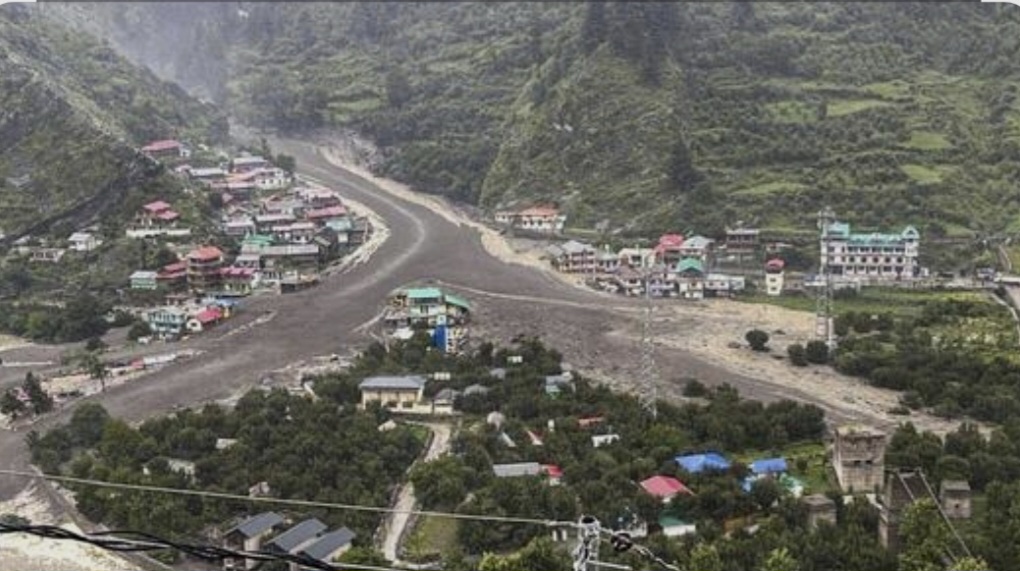
As I watched the video of Dharali, the events of that night in Kultham came rising back to me, unbidden. My hands trembled, my throat went dry, and in flashes, one after another, I saw it all again: the broken paths, the shattered houses, the chaos of that night. My dream had once been simple, to live in my own village and farm its land, and I had watched that dream come apart, helpless, unable to do anything but stand and see it happen.
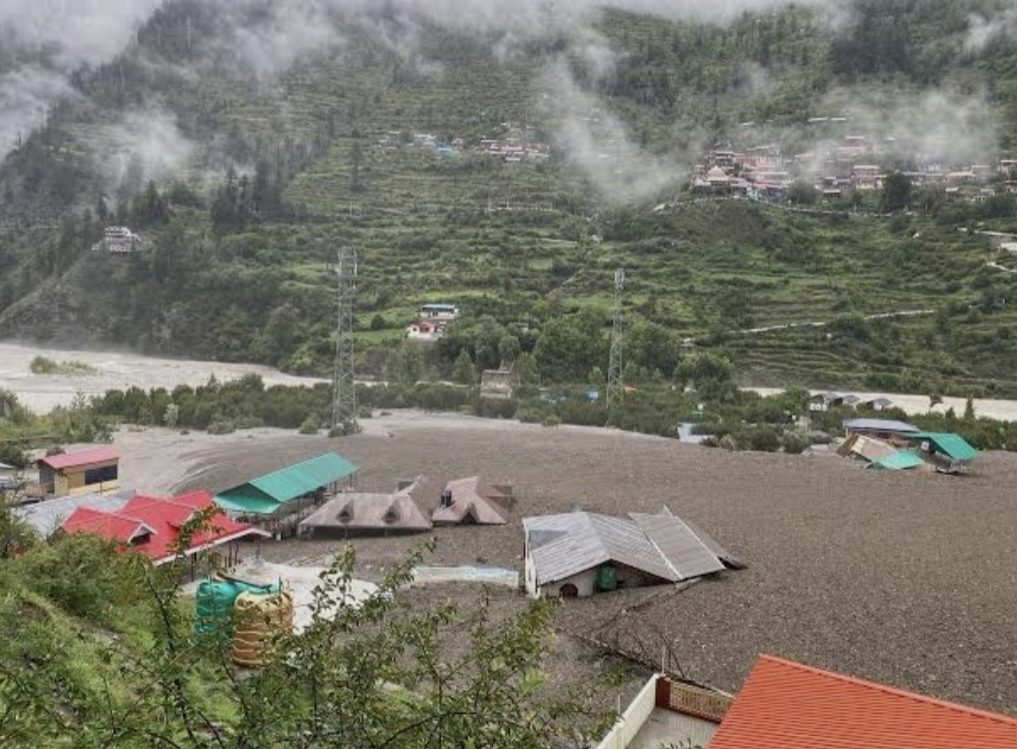
I am not writing this story only for myself. I am writing it so that Kultham does not remain only a memory of the past, so that it does not fade the way so many small, forgotten places do. Perhaps one generation will remember it. But after that, who will? This is my attempt to keep the soul of my village alive through story, because now, its existence can survive only within stories: that village where my childhood passed, where my family’s home of dreams once stood, and where, even today, I return, in my dreams.
- Bhado (also known as Bhadrapada or Bhadon) is the sixth month of the Hindu lunar calendar, falling during the monsoon season between August and September in the Gregorian calendar ↩︎
- Gori River is a river which originates from Milam Glacier in the neighbouring Johar Valley. ↩︎
Meet the storyteller

Voices of Rural India
Voices of Rural India is a not-for-profit digital initiative that took birth during the pandemic lockdown of 2020 to host curated stories by rural storytellers, in their own voices. With nearly 80 stories from 11 states of India, this platform facilitates storytellers to leverage digital technology and relate their stories through the written word, photo and video stories.
ग्रामीण भारत की आवाज़ें एक नॉट-फ़ॉर-प्रॉफ़िट डिजिटल प्लैटफ़ॉर्म है जो 2020 के महामारी लॉकडाउन के दौरान शुरू हुई थी, जिसका उद्देश्य ग्रामीण कहानीकारों द्वारा उनकी अपनी आवाज़ में कहानियों को प्रस्तुत करना है। भारत के 11 राज्यों की लगभग 80 कहानियों के साथ, यह मंच कहानीकारों को डिजिटल तकनीक का प्रयोग कर और लिखित शब्द, फ़ोटो और वीडियो कहानियों के माध्यम से अपनी कहानियाँ बताने में सक्रीय रूप से सहयोग देता है।
Ishant Mehra
Bio
Ishant Mehra hails from Kultham, a small village in Munsiari, Uttarakhand. He was born in the lap of the mountains, where life is always lived between struggle and nature. In 2013, his entire village was struck by a landslide, and this left a deep mark on both his life and his dreams. After this, he had to move from Kultham to Sarmoli (in Munsiari), but his roots have always remained bound to that place. In the year 2022, he passed his 12th-grade examinations. Because of his family's wish, he had to go to the city to continue his studies, even though his heart remained in the village. Even so, he lived in the city for three years and completed his graduation in 2025. At present, he lives in Sarmoli, working on issues connected to forests and the Himalay.
ईशान्त मेहरा उत्तराखंड के मुनस्यारी के छोटे से गाँव कुल्थम से हैं। उनका जन्म पहाड़ों की गोद में हुआ, जहाँ जीवन हमेशा संघर्ष और प्रकृति के बीच चलता है।2013 में भूस्खलन के कारण उनका पूरा गाँव प्रभावित हुआ, जिससे उनके जीवन और सपनों दोनों पर गहरा असर पड़ा। इसके बाद उन्हें कुल्थम से सरमोली (मुनस्यारी) में जाना पड़ा, लेकिन उनकी जड़ें हमेशा वहीं जुड़ी रहीं।वर्ष 2022 में उन्होंने 12वीं कक्षा उत्तीर्ण की। परिवार की इच्छा के कारण उन्हें आगे की पढ़ाई के लिए शहर जाना पड़ा, जबकि उनका मन गाँव में ही था। इसके बावजूद उन्होंने तीन वर्ष तक शहर में रहकर 2025 में स्नातक की पढ़ाई पूरी की। वर्तमान में वे सरमोली में रहकर प्रकृति और हिमालय से जुड़े मुद्दों पर कार्य कर रहे हैं।

You May Also Like